The Complete Guide to Acid & Chlorine Pool Washing for Corona Pool Owners
Picture this: you step outside to enjoy your backyard oasis, only to find your once-pristine pool looking more like a science experiment gone wrong. Stubborn stains, algae buildup, and cloudy water have transformed your swimming paradise into an eyesore. If you’re a Corona pool owner facing this frustrating scenario, Acid & Chlorine Pool Washing might be the powerful solution you need to restore your pool to its former glory.
Key Takeaways
• Acid washing removes stubborn stains and calcium buildup that regular cleaning can’t eliminate, while chlorine washing targets algae and bacterial contamination
• Safety is paramount – proper protective equipment, ventilation, and chemical handling procedures are essential for both acid and chlorine pool washing
• Professional assessment is recommended for severe contamination, as improper chemical use can damage pool surfaces and equipment
• Regular maintenance prevents the need for intensive acid and chlorine washing treatments
• Corona’s climate conditions require specific timing and precautions due to heat and wind factors Many homeowners seek professional cleaning in Riverside area to maintain their pools effectively. This ensures a hygienic swimming environment and prolongs the life of pool surfaces and equipment. Engaging qualified professionals can also provide tailored maintenance schedules, making pool upkeep hassle-free.
Understanding Acid & Chlorine Pool Washing: What Every Corona Pool Owner Needs to Know
Acid & Chlorine Pool Washing represents two distinct but complementary approaches to deep pool cleaning that go far beyond your typical maintenance routine. While regular pool care keeps your water balanced and clean, these intensive treatments tackle problems that standard chemicals simply can’t handle.
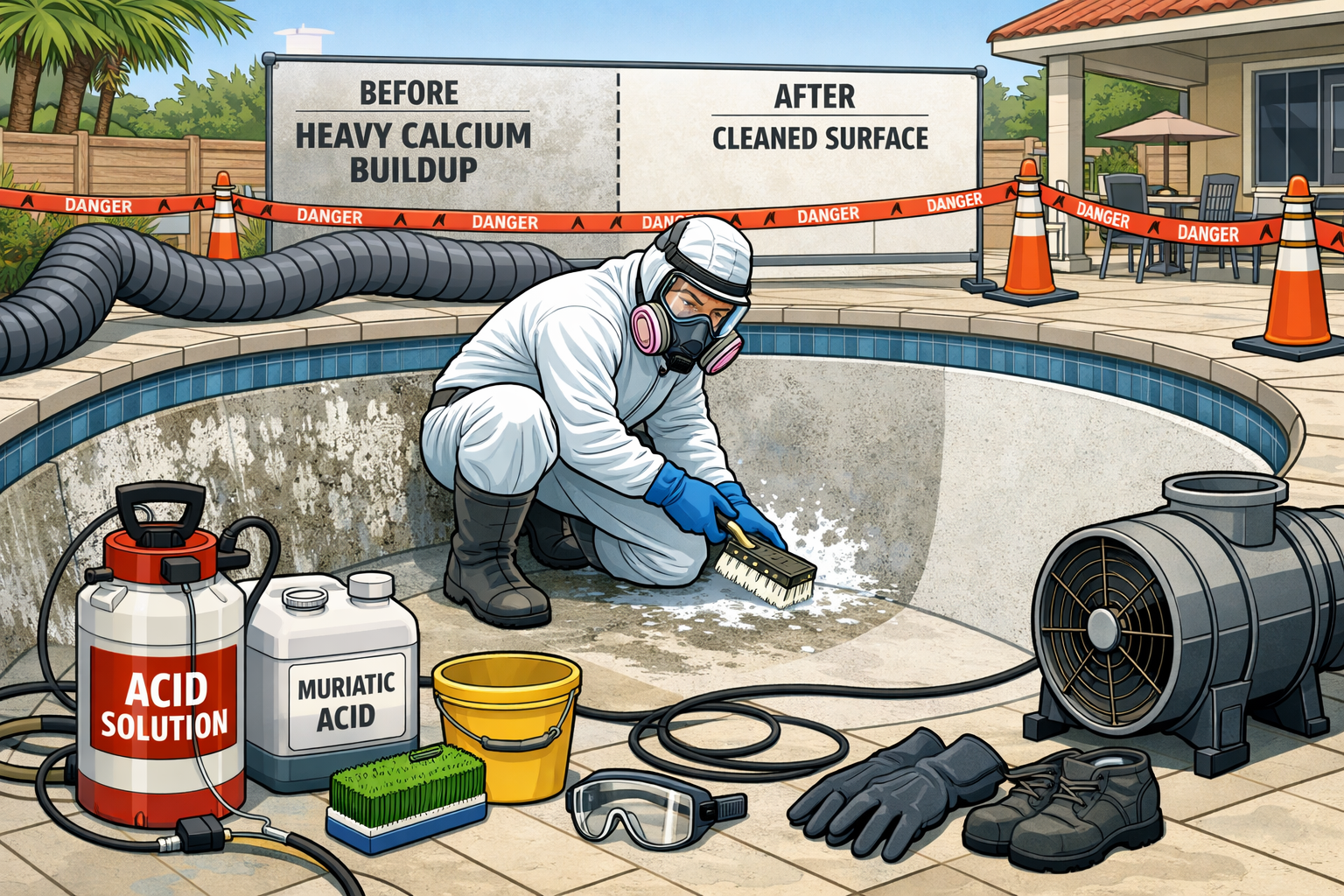
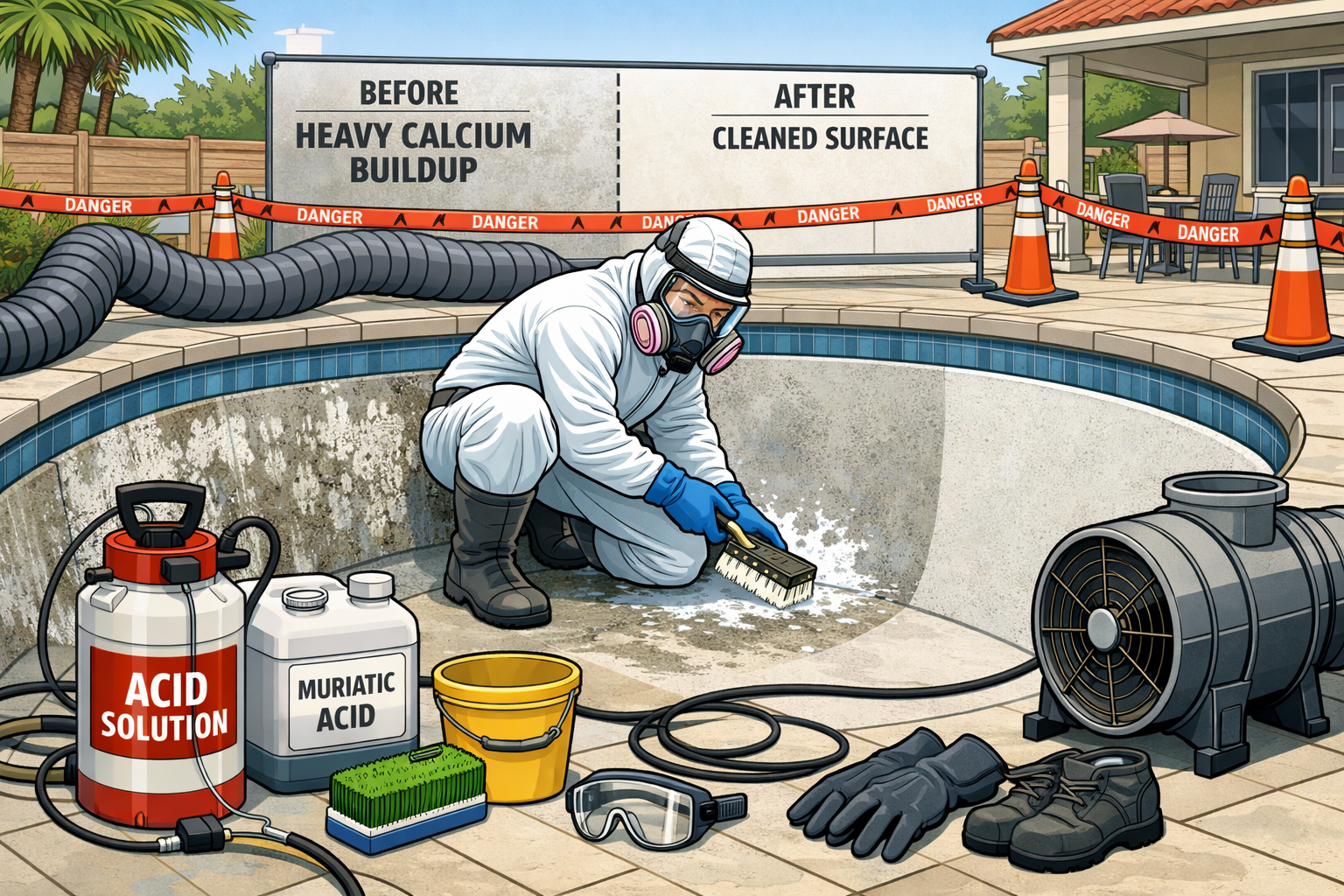
Acid washing involves using muriatic acid (hydrochloric acid) to remove stubborn stains, calcium deposits, and mineral buildup from pool surfaces. This process literally etches away a thin layer of the pool’s surface, taking embedded stains with it [1]. Chlorine washing, on the other hand, uses concentrated chlorine solutions to eliminate persistent algae, bacteria, and organic contamination that has penetrated porous surfaces.
In Corona’s unique climate, with its hot summers and occasional Santa Ana winds, pools face specific challenges. The combination of intense UV exposure, dust storms, and high temperatures creates ideal conditions for rapid algae growth and mineral precipitation. This makes understanding proper Acid & Chlorine Pool Washing techniques essential for local pool owners.
When Do You Need These Intensive Treatments?
🔍 Signs your pool needs acid washing:
- Persistent stains that won’t respond to regular cleaning
- Rough, chalky feeling on pool surfaces
- White or gray calcium buildup along the waterline
- Discolored plaster or concrete surfaces
🔍 Signs your pool needs chlorine washing:
- Black or green algae that returns despite treatment
- Persistent chlorine demand (chlorine disappears quickly)
- Musty or organic odors
- Slippery surfaces that feel slimy to touch
The Science Behind Acid & Chlorine Pool Washing Methods
Understanding the chemistry behind these treatments helps Corona pool owners make informed decisions about when and how to use them safely and effectively.
Acid Washing: Chemical Etching for Deep Cleaning
Acid washing works through a controlled chemical reaction between muriatic acid and the alkaline materials in your pool’s surface. When properly diluted muriatic acid contacts concrete or plaster, it dissolves calcium carbonate deposits and etches away a microscopic layer of material [2].
The typical acid washing process involves:
- Complete pool drainage – Essential for safety and effectiveness
- Surface preparation – Removing debris and loose material
- Acid application – Using proper dilution ratios (typically 1:10 to 1:20)
- Neutralization – Immediately washing with water and soda ash
- Waste disposal – Following local Corona environmental regulations
“Acid washing should remove no more than 1/32 inch of surface material. Excessive etching can permanently damage your pool’s finish and create rough surfaces that harbor bacteria and algae.” – Pool Industry Standards
Chlorine Washing: Oxidation for Biological Contamination
Chlorine washing utilizes the powerful oxidizing properties of concentrated chlorine to break down organic compounds and destroy resistant microorganisms. This process is particularly effective against biofilms – protective layers that allow bacteria and algae to resist normal chlorine levels.
Key components of effective chlorine washing:
- Calcium hypochlorite (cal-hypo) for maximum oxidizing power
- Proper pH adjustment (7.2-7.6) for optimal chlorine effectiveness
- Extended contact time allowing thorough penetration
- Mechanical agitation to break up biofilms and organic deposits
Safety First: Essential Precautions for Acid & Chlorine Pool Washing
Safety cannot be overstated when dealing with concentrated pool chemicals. Both acid and chlorine washing involve hazardous materials that can cause severe injury if mishandled.
Personal Protective Equipment (PPE) Requirements
For acid washing:
- ✅ Chemical-resistant gloves (neoprene or nitrile)
- ✅ Full-face respirator with acid gas cartridges
- ✅ Chemical-resistant clothing covering all exposed skin
- ✅ Non-slip, chemical-resistant boots
- ✅ Emergency eyewash station within immediate reach
For chlorine washing:
- ✅ Chlorine-resistant gloves (avoid latex)
- ✅ Respiratory protection against chlorine gas
- ✅ Eye protection with side shields
- ✅ Protective clothing that won’t react with chlorine
- ✅ Ventilation equipment to prevent gas accumulation
Corona-Specific Safety Considerations
Corona’s climate presents unique challenges for Acid & Chlorine Pool Washing safety:
🌡️ Temperature factors:
- Avoid treatments during extreme heat (above 95°F)
- Chemical reactions accelerate in high temperatures
- Increased evaporation creates higher vapor concentrations
💨 Wind considerations:
- Santa Ana winds can spread chemical vapors unpredictably
- Schedule treatments during calm weather conditions
- Position yourself upwind of chemical applications
🏠 Neighborhood awareness:
- Notify adjacent neighbors before beginning treatments
- Ensure adequate ventilation away from neighboring properties
- Follow Corona city ordinances for chemical use and disposal
Step-by-Step Acid & Chlorine Pool Washing Procedures
Professional Acid Washing Process
Phase 1: Preparation and Planning
Before beginning any acid washing project, thorough preparation ensures both safety and effectiveness:
- Obtain necessary permits – Check with Corona building department
- Schedule utility marking – Protect underground lines during drainage
- Arrange waste disposal – Coordinate with local waste management
- Weather monitoring – Confirm 2-3 days of calm, moderate conditions
- Equipment inspection – Verify all safety and application equipment
Phase 2: Pool Preparation
| Step | Action | Duration | Safety Notes |
|---|---|---|---|
| 1 | Complete water removal | 4-6 hours | Monitor for structural issues |
| 2 | Surface cleaning | 2-3 hours | Remove all debris and loose material |
| 3 | Crack inspection | 1 hour | Document existing damage |
| 4 | Safety zone setup | 30 minutes | Establish barriers and ventilation |
Phase 3: Acid Application
The actual acid washing requires precise technique and constant safety awareness:
🔧 Mixing protocol:
- Always add acid to water, never water to acid
- Use plastic containers only (never metal)
- Maintain 1:10 ratio for initial application
- Prepare small batches to maintain effectiveness
🔧 Application technique:
- Work in 10-foot sections starting at shallow end
- Apply acid solution with acid-resistant brush
- Allow 30-60 seconds contact time maximum
- Immediately neutralize with water and soda ash
Phase 4: Neutralization and Cleanup
Proper neutralization prevents ongoing damage and environmental contamination:
- Flood treated areas immediately with clean water
- Apply soda ash solution to neutralize remaining acid
- Test pH of all runoff before disposal
- Document waste disposal according to Corona regulations
Comprehensive Chlorine Washing Methodology
Chlorine washing offers a less invasive alternative for biological contamination while requiring equally careful execution.
Pre-treatment assessment:
- Test existing chlorine demand
- Identify contamination type and severity
- Calculate required chlorine quantities
- Plan treatment timing for optimal effectiveness
Treatment execution:
- pH adjustment – Lower to 7.2-7.4 for maximum chlorine effectiveness
- Shock application – Add 10-20 times normal chlorine levels
- Circulation enhancement – Run pumps continuously during treatment
- Mechanical agitation – Brush all surfaces thoroughly
- Extended contact time – Maintain high chlorine for 24-48 hours
Monitoring and adjustment:
- Test chlorine levels every 4-6 hours
- Maintain minimum 10 ppm free chlorine
- Adjust pH as needed (chlorine raises pH over time)
- Document water quality changes throughout process
Choosing Between Professional Services and DIY Acid & Chlorine Pool Washing
The decision between professional service and DIY treatment depends on several factors specific to your situation and comfort level with chemical handling.
When to Choose Professional Services
✅ Recommend professional service for:
- First-time acid or chlorine washing
- Severe contamination requiring multiple treatments
- Pools with expensive or delicate finishes
- Situations involving structural concerns
- Lack of proper safety equipment
- Uncertainty about local regulations
Professional advantages:
- Comprehensive insurance coverage
- Proper waste disposal handling
- Advanced safety equipment and training
- Experience with Corona-specific challenges
- Warranty on work performed
DIY Considerations for Experienced Pool Owners
✅ DIY may be appropriate for:
- Minor staining or algae issues
- Pool owners with chemical handling experience
- Availability of proper safety equipment
- Understanding of local disposal requirements
- Confidence in emergency response procedures
Cost comparison for Corona pool owners:
| Service Type | Professional Cost | DIY Cost | Risk Level |
|---|---|---|---|
| Acid washing | $800-1,500 | $200-400 | High |
| Chlorine washing | $300-600 | $100-200 | Moderate |
| Combined treatment | $1,000-2,000 | $300-600 | Very High |
Preventing Future Need for Intensive Acid & Chlorine Pool Washing
Prevention remains the most cost-effective approach to pool maintenance. Understanding what causes the need for intensive treatments helps Corona pool owners maintain their pools proactively.
Water Chemistry Management
🎯 Target ranges for Corona pools:
- pH: 7.2-7.6 (slightly lower in hot weather)
- Total alkalinity: 80-120 ppm
- Calcium hardness: 150-300 ppm (adjust for local water)
- Free chlorine: 1.0-3.0 ppm (higher during heat waves)
- Cyanuric acid: 30-50 ppm (essential for UV protection)
Seasonal Maintenance Strategies
Spring preparation:
- Deep clean after winter closure
- Balance water chemistry before heavy use
- Inspect and repair any winter damage
- Establish regular maintenance schedule
Summer maintenance:
- Increase cleaning frequency during peak use
- Monitor chlorine consumption closely
- Address algae growth immediately
- Maintain proper circulation during heat waves
Fall transition:
- Gradually reduce chemical levels
- Deep clean before reduced usage
- Address any staining before winter
- Prepare for seasonal weather changes
Winter care:
- Maintain minimum chemical levels
- Continue circulation in freeze-prone periods
- Monitor for algae growth in mild weather
- Plan spring maintenance needs
Advanced Prevention Techniques
UV system installation:
UV sterilizers reduce chlorine demand and prevent resistant organism growth, particularly valuable in Corona’s high-UV environment.
Ozone generation:
Ozone systems provide powerful oxidation without chemical residuals, reducing the buildup of chloramines and organic contamination.
Mineral sanitizers:
Silver and copper ionization systems provide residual antimicrobial effects, reducing reliance on chlorine and preventing biofilm formation.
Environmental Considerations and Local Regulations
Corona pool owners must navigate both environmental responsibility and local regulatory requirements when performing Acid & Chlorine Pool Washing.
Waste Disposal Requirements
Acid washing waste:
- Contains heavy metals and low pH materials
- Requires neutralization before disposal
- May need professional hazardous waste handling
- Cannot be discharged to storm drains or landscaping
Chlorine washing waste:
- High chlorine levels toxic to aquatic life
- Requires dechlorination before disposal
- May be discharged to sanitary sewer (with permits)
- Must meet local discharge standards
Corona Municipal Guidelines
The City of Corona has specific requirements for pool chemical use and waste disposal:
- Permit requirements for commercial pool treatments
- Notification rules for residential chemical use
- Discharge standards for treated water disposal
- Emergency response procedures for chemical incidents
Environmental Best Practices
🌱 Minimize environmental impact:
- Use minimum effective chemical quantities
- Choose biodegradable alternatives when possible
- Implement proper containment during treatments
- Plan treatments to minimize weather-related runoff
- Consider neighboring properties and wildlife
Troubleshooting Common Issues with Acid & Chlorine Pool Washing
Even well-planned treatments can encounter problems. Understanding common issues and their solutions helps ensure successful outcomes.
Acid Washing Complications
Problem: Uneven etching or streaking
- Cause: Inconsistent application or dilution
- Solution: Re-treat affected areas with proper technique
- Prevention: Maintain consistent mixing and application
Problem: Excessive surface damage
- Cause: Too strong acid concentration or extended contact time
- Solution: Stop treatment immediately, neutralize thoroughly
- Prevention: Test technique on inconspicuous area first
Problem: Persistent staining after treatment
- Cause: Stains deeper than acid can reach, or wrong stain type
- Solution: Consider alternative treatments or professional assessment
- Prevention: Proper stain identification before treatment
Chlorine Washing Challenges
Problem: Rapid chlorine loss during treatment
- Cause: High organic load or ammonia contamination
- Solution: Continue adding chlorine until breakpoint achieved
- Prevention: Pre-treat with algaecide or clarifier
Problem: Equipment damage from high chlorine
- Cause: Chlorine corrosion of metal components
- Solution: Replace damaged parts, improve circulation
- Prevention: Remove or protect sensitive equipment
Problem: Persistent algae after treatment
- Cause: Resistant algae strains or inadequate contact time
- Solution: Combine with mechanical removal and algaecide
- Prevention: Regular maintenance and proper water balance
The Future of Pool Cleaning: Innovations Beyond Traditional Acid & Chlorine Pool Washing
As technology advances, new methods are emerging that may supplement or replace traditional Acid & Chlorine Pool Washing techniques.
Emerging Technologies
Plasma cleaning systems:
Advanced oxidation using plasma technology provides powerful cleaning without chemical residuals.
Electrochemical treatment:
On-site generation of cleaning compounds reduces chemical storage and transportation concerns.
Biological treatments:
Enzyme-based cleaners break down organic contamination naturally, reducing need for harsh chemicals.
Integration with Smart Pool Systems
Modern pool automation systems can optimize cleaning treatments by:
- Monitoring water quality continuously
- Predicting treatment needs based on usage patterns
- Automating chemical dosing for consistent results
- Providing remote monitoring and control capabilities
Conclusion: Mastering Acid & Chlorine Pool Washing for Long-Term Pool Health
Acid & Chlorine Pool Washing represents powerful tools in the Corona pool owner’s maintenance arsenal, but they require respect, knowledge, and careful execution. These intensive treatments can restore even severely compromised pools to pristine condition when properly applied.
The key to success lies in understanding when these treatments are necessary, executing them safely, and implementing prevention strategies to minimize future needs. Corona’s unique climate conditions demand particular attention to timing, safety precautions, and environmental considerations.
Your Next Steps:
- Assess your pool’s current condition using the guidelines provided
- Evaluate your comfort level with chemical handling and safety procedures
- Research local professionals if you decide against DIY treatment
- Invest in proper safety equipment before attempting any intensive treatments
- Develop a prevention-focused maintenance plan to avoid future problems
Remember that while Acid & Chlorine Pool Washing can solve serious pool problems, prevention through regular maintenance remains your best strategy for long-term pool health and enjoyment.
Whether you choose professional services or tackle these treatments yourself, prioritize safety above all else. Your pool should be a source of enjoyment and relaxation, not a safety hazard. With proper knowledge, preparation, and execution, you can maintain a beautiful, healthy pool that serves your family for years to come.
Take action today by evaluating your pool’s needs, starting with proper pool chemical balancing, and developing a comprehensive maintenance strategy that includes both regular care and occasional intensive treatments when necessary. Your future self will thank you for the investment in proper pool care.
References
[1] National Swimming Pool Foundation. (2024). Pool Operator Handbook: Chemical Treatment Guidelines. NSPF Publications.
[2] Association of Pool & Spa Professionals. (2025). Technical Standards for Pool Surface Treatment. APSP Standards Committee.
SEO Meta Information
Meta Title: Acid & Chlorine Pool Washing Guide for Corona Pool Owners 2026
Meta Description: Complete guide to acid & chlorine pool washing for Corona pools. Learn safe techniques, when to use each method, and prevention tips from pool experts.
Images