DIY Pool Maintenance vs. Professional Pool Service: Pros & Cons of DIY vs Hiring Pros
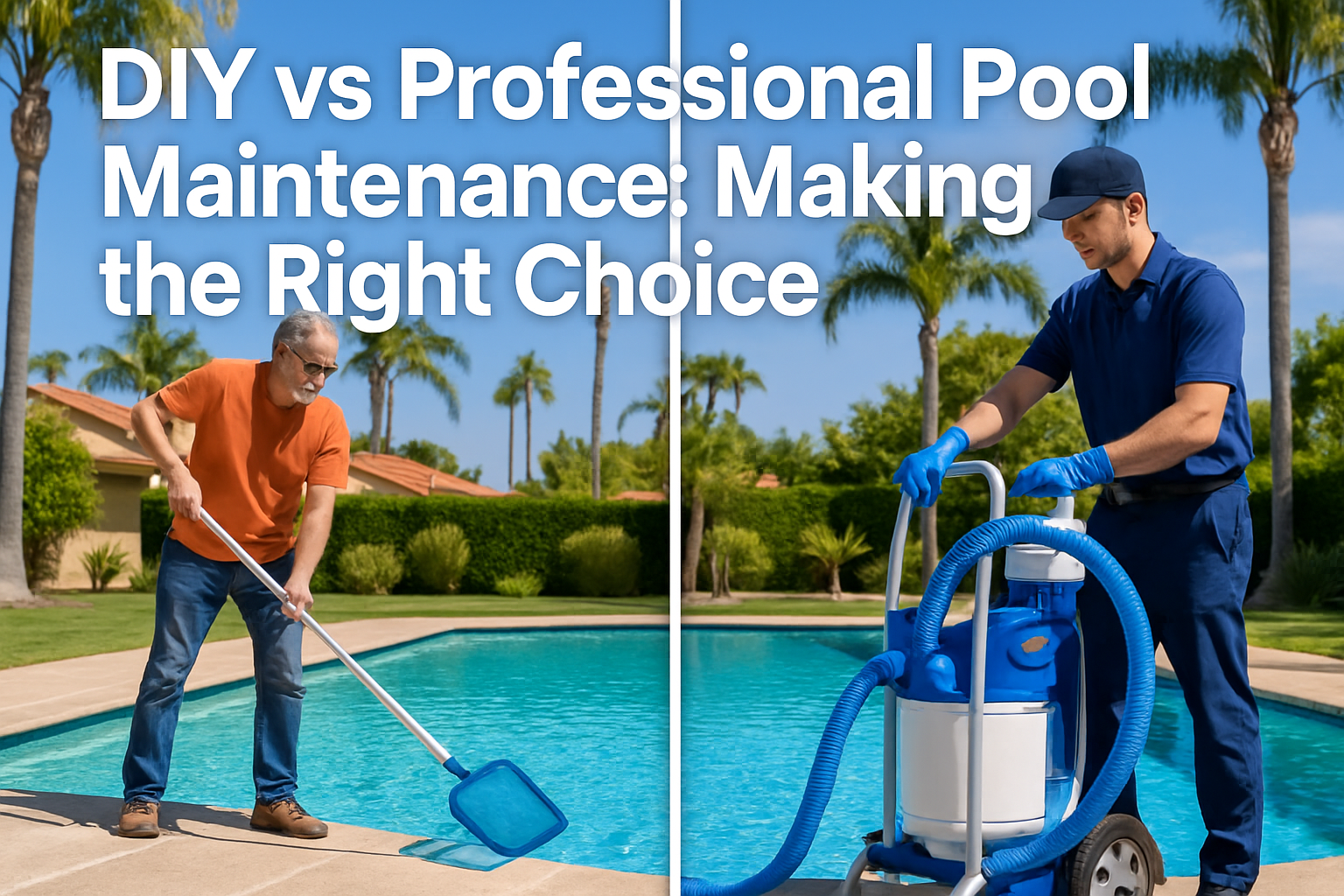
Picture this: It's a scorching Saturday morning in Riverside, and you're staring at your cloudy pool water, wondering whether to grab your skimmer net or pick up the phone to call a professional. This decision between DIY pool maintenance vs. professional service is one that thousands of pool owners face every year, and it's more complex than you might think.
The choice between maintaining your pool yourself or hiring professionals isn't just about cost—it's about time, expertise, safety, and long-term pool health. In Riverside's unique climate, where pools get year-round use and face specific challenges like hard water and intense UV exposure, this decision becomes even more critical.
Key Takeaways
• DIY pool maintenance can save money upfront but requires significant time investment and learning curve
• Professional pool service offers expertise and convenience but comes with ongoing costs
• Riverside's climate creates unique challenges that may favor professional maintenance
• Long-term costs often favor professional service when factoring in equipment, chemicals, and potential repairs
• Hybrid approaches combining DIY basics with professional deep cleaning can offer the best of both worlds
Understanding Pool Maintenance Fundamentals
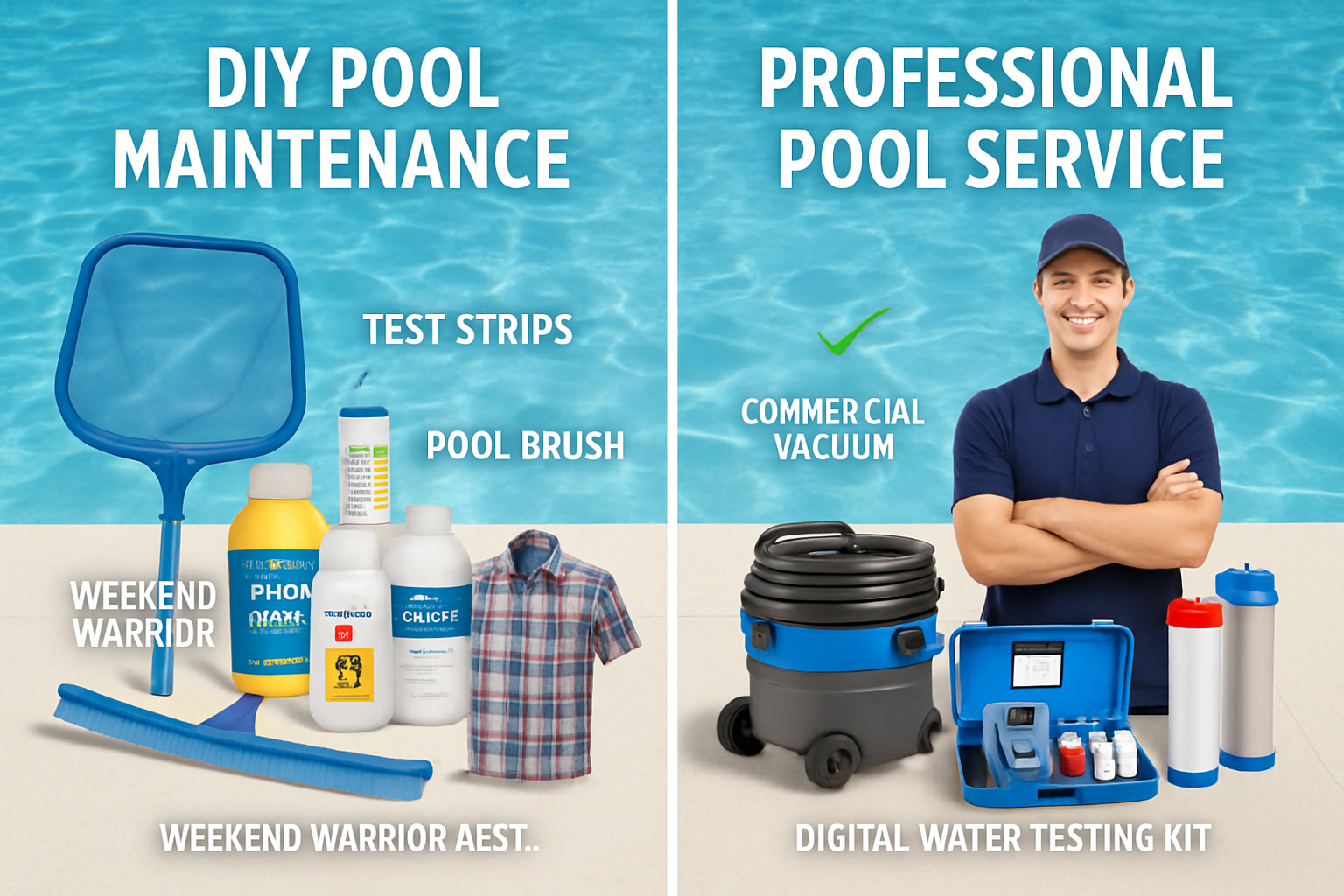
Pool maintenance involves much more than just skimming leaves and adding chlorine. Whether you choose the DIY pool maintenance vs. professional route, you'll need to understand the core components that keep your pool safe and sparkling.
Essential Pool Maintenance Tasks Include:
- Water chemistry testing and balancing 🧪
- Skimming debris and cleaning surfaces
- Vacuuming and brushing pool walls
- Filter cleaning and replacement
- Equipment inspection and maintenance
- Seasonal opening and closing procedures
The complexity of these tasks varies significantly. While skimming leaves seems straightforward, properly balancing water chemistry requires understanding pH levels, alkalinity, calcium hardness, and sanitizer levels. In Riverside's hard water conditions, this becomes even more challenging.
"Many pool owners underestimate the technical knowledge required for proper pool maintenance. What seems like a simple task often involves complex chemistry and equipment knowledge." – Pool Industry Expert
The DIY Pool Maintenance Approach: Pros and Cons
Advantages of DIY Pool Maintenance
Cost Savings 💰
The most obvious benefit of DIY pool maintenance is the potential for significant cost savings. Professional pool service in Riverside typically costs $100-200 per month, which adds up to $1,200-2,400 annually. By handling maintenance yourself, you eliminate this recurring expense.
Complete Control
When you maintain your own pool, you have complete control over timing, products used, and maintenance standards. You can clean your pool whenever you want, use specific brands of chemicals, and address issues immediately as they arise.
Learning and Satisfaction
Many pool owners find genuine satisfaction in maintaining their own pools. There's a sense of accomplishment in keeping your pool crystal clear through your own efforts, and you'll develop valuable knowledge about your pool's systems.
Immediate Response
When issues arise, you can address them immediately rather than waiting for a service appointment. This can prevent minor problems from becoming major headaches.
Disadvantages of DIY Pool Maintenance
Time Investment ⏰
Proper pool maintenance requires 3-5 hours per week during peak season. This includes daily skimming, weekly chemical testing, bi-weekly deep cleaning, and monthly equipment maintenance. For busy Riverside families, this time commitment can be overwhelming.
Learning Curve and Mistakes
Pool chemistry is complex, and mistakes can be costly. Improper chemical balancing can damage equipment, irritate swimmers, or create unsafe conditions. New DIY maintainers often struggle with:
- Balancing pH and alkalinity
- Understanding chlorine vs. bromine systems
- Recognizing equipment problems early
- Seasonal maintenance requirements
Equipment and Chemical Costs
While you save on service fees, you'll need to invest in:
- Testing kits and supplies ($50-100 annually)
- Cleaning equipment ($200-500 initial investment)
- Chemicals ($300-600 annually)
- Equipment repairs and replacements
Safety Concerns
Pool chemicals can be dangerous when mishandled. Improper storage, mixing, or application can create toxic gases or cause burns. Additionally, some maintenance tasks involve electrical components that require professional expertise.
Professional Pool Service: Pros and Cons
Advantages of Professional Pool Service
Expertise and Experience 🎓
Professional pool technicians bring years of experience and training to your pool maintenance. They can quickly identify problems, understand complex water chemistry, and prevent issues before they become expensive repairs.
Time Savings
Hiring professionals frees up 3-5 hours per week that you can spend with family, on hobbies, or other priorities. For busy Riverside professionals, this time savings often justifies the cost.
Consistent Service
Professional services provide consistent, scheduled maintenance regardless of weather, vacation, or busy schedules. Your pool receives regular attention that maintains optimal conditions year-round.
Advanced Equipment and Bulk Purchasing
Professional services use commercial-grade equipment and buy chemicals in bulk, often achieving better results more efficiently than homeowner-grade supplies.
Problem Prevention and Early Detection
Experienced technicians can spot potential problems early, preventing costly repairs. They understand how Riverside's climate affects pools and can adjust maintenance accordingly.
Disadvantages of Professional Pool Service
Ongoing Costs 💸
Professional pool service represents a significant ongoing expense. In Riverside, expect to pay $100-200 monthly for basic service, with additional costs for repairs, chemical balancing, or equipment maintenance.
Scheduling Constraints
You'll need to work around the service company's schedule, which may not align with your preferences. Some homeowners feel inconvenienced by having service technicians on their property regularly.
Less Control
When you hire professionals, you give up direct control over products used, timing of service, and maintenance standards. Some pool owners prefer to handle these decisions themselves.
Quality Variations
Not all pool service companies provide the same level of service. Poor communication, inconsistent technicians, or subpar work can create frustration and additional costs.
Cost Analysis: DIY Pool Maintenance vs. Professional Service
Understanding the true cost comparison between DIY pool maintenance vs. professional service requires looking beyond monthly service fees to include all associated expenses.
DIY Pool Maintenance Costs
| Expense Category | Initial Cost | Annual Cost |
|---|---|---|
| Testing Equipment | $50-150 | $30-50 |
| Cleaning Tools | $200-500 | $50-100 |
| Chemicals | – | $300-600 |
| Equipment Repairs | – | $200-800 |
| Total First Year | $250-650 | $580-1,550 |
| Ongoing Annual | – | $580-1,550 |
Professional Service Costs
| Service Level | Monthly Cost | Annual Cost |
|---|---|---|
| Basic Service | $100-150 | $1,200-1,800 |
| Full Service | $150-200 | $1,800-2,400 |
| Premium Service | $200-300 | $2,400-3,600 |
Hidden Costs to Consider
DIY Hidden Costs:
- Time value (3-5 hours weekly at $25/hour = $3,900-6,500 annually)
- Costly mistakes and learning curve
- Emergency repairs from improper maintenance
- Equipment replacement from chemical damage
Professional Service Hidden Costs:
- Additional charges for repairs
- Chemical balancing fees
- Emergency service calls
- Equipment upgrades and replacements
"When you factor in the value of your time and the cost of mistakes, professional service often provides better long-term value, especially for busy families." – Pool Maintenance Specialist
Time Investment and Lifestyle Considerations
The DIY pool maintenance vs. professional decision often comes down to lifestyle and time availability rather than just cost.
DIY Time Requirements
Daily Tasks (10-15 minutes):
- Skimming surface debris
- Checking skimmer baskets
- Visual inspection for problems
Weekly Tasks (2-3 hours):
- Comprehensive water testing
- Chemical adjustment
- Brushing walls and steps
- Vacuuming pool floor
- Cleaning waterline
Monthly Tasks (3-4 hours):
- Filter cleaning/replacement
- Equipment inspection
- Deep cleaning and scrubbing
- Chemical inventory and restocking
Seasonal Tasks (8-12 hours):
- Opening/closing procedures
- Equipment winterization
- Major cleaning projects
- System maintenance
Professional Service Time Savings
Professional services handle all maintenance tasks, typically visiting weekly for 30-60 minutes. This frees up approximately 200-260 hours annually that you can dedicate to other activities.
For Riverside families juggling work, children's activities, and other commitments, this time savings often outweighs the cost difference, especially when considering the value of leisure time and family activities.
Expertise and Technical Knowledge Requirements
Pool maintenance involves more technical knowledge than many homeowners realize. The DIY pool maintenance vs. professional choice often depends on your willingness and ability to develop this expertise.
Essential Knowledge Areas
Water Chemistry 🔬
- pH balance (7.2-7.6 optimal range)
- Total alkalinity (80-120 ppm)
- Calcium hardness (150-300 ppm)
- Sanitizer levels (chlorine, bromine, salt)
- Cyanuric acid stabilizer levels
Equipment Understanding
- Pump and motor operation
- Filter types and maintenance
- Heater operation and troubleshooting
- Automation system programming
- Plumbing and electrical basics
Problem Diagnosis
- Algae identification and treatment
- Water clarity issues
- Equipment malfunction symptoms
- Leak detection and repair
- Chemical imbalance correction
Riverside-Specific Challenges
Hard Water Issues
Riverside's hard water creates unique challenges that require specialized knowledge:
- Calcium buildup on surfaces and equipment
- pH drift and alkalinity management
- Filter clogging and reduced efficiency
- Equipment scaling and damage
Climate Considerations
- Year-round pool use requirements
- UV degradation of chemicals
- Dust and debris management
- Temperature fluctuation effects
Professional technicians understand these local challenges and adjust maintenance accordingly, while DIY maintainers must learn through experience and research.
Quality and Reliability Factors
The quality and reliability of pool maintenance can significantly impact your swimming experience and long-term costs.
DIY Quality Factors
Consistency Challenges
DIY maintenance quality often varies based on:
- Available time and energy
- Weather conditions
- Vacation and travel schedules
- Motivation and attention to detail
- Knowledge and experience level
Learning Curve Impact
New DIY maintainers typically experience:
- Initial water quality issues
- Equipment problems from inexperience
- Chemical waste from overcorrection
- Missed maintenance leading to bigger problems
Professional Service Quality
Trained Expertise
Professional technicians provide:
- Consistent service regardless of conditions
- Trained eye for problem identification
- Proper chemical handling and application
- Equipment maintenance expertise
- Industry knowledge and best practices
Quality Assurance
Reputable pool service companies offer:
- Service guarantees and warranties
- Licensed and insured technicians
- Regular training and certification
- Quality control procedures
- Customer service support
Making the Right Choice for Your Situation
The DIY pool maintenance vs. professional decision should be based on your specific circumstances, priorities, and capabilities.
Choose DIY Pool Maintenance If:
✅ You have adequate time (3-5 hours weekly)
✅ You enjoy learning new skills and problem-solving
✅ Budget is a primary concern and you want to minimize ongoing costs
✅ You prefer complete control over your pool maintenance
✅ You're technically inclined and comfortable with equipment
✅ Your pool is relatively simple without complex features
Choose Professional Service If:
✅ Time is limited due to work or family commitments
✅ You prefer convenience and worry-free maintenance
✅ Your pool has complex features (automation, special finishes, etc.)
✅ You value expertise and professional problem-solving
✅ You want consistent results regardless of your schedule
✅ Long-term cost efficiency is more important than upfront savings
Hybrid Approach Options
Many Riverside pool owners find success with hybrid approaches:
Basic DIY + Professional Deep Service
- Handle daily skimming and basic maintenance yourself
- Schedule monthly professional service for deep cleaning and equipment maintenance
- Call professionals for complex problems or seasonal services
Seasonal Professional Service
- Maintain the pool yourself during active season
- Hire professionals for opening/closing and winter maintenance
- Use professional service during vacation periods
Frequently Asked Questions
How much can I really save with DIY pool maintenance?
DIY maintenance can save $1,200-2,400 annually in service fees, but when you factor in your time value, equipment costs, and potential mistakes, the actual savings are often $500-1,000 per year. The savings are most significant if you enjoy the work and have adequate time.
What's the biggest mistake new DIY pool maintainers make?
The most common mistake is improper chemical balancing, particularly adding too much chlorine or shocking the pool incorrectly. This can damage equipment, irritate swimmers, and actually make water quality worse. Always test water before adding chemicals and follow manufacturer instructions carefully.
How do I know if a professional pool service is worth the cost?
Professional service is typically worth the cost if you value your time at more than $15-20 per hour, have a busy lifestyle, or prefer guaranteed results. Calculate the value of 3-5 hours weekly plus the peace of mind from professional expertise.
Can I switch between DIY and professional service?
Yes, many pool owners switch based on seasons, life circumstances, or experience level. Most professional services offer flexible scheduling, and you can always resume DIY maintenance if your situation changes.
What should I look for in a professional pool service?
Look for licensed and insured companies with good local references, clear pricing, regular scheduling, and responsive customer service. Ask about their experience with Riverside's specific water conditions and climate challenges.
Is DIY pool maintenance safe?
DIY maintenance can be safe when proper precautions are followed, but pool chemicals are potentially dangerous. Never mix chemicals, always add chemicals to water (not water to chemicals), store chemicals properly, and consider professional help for complex equipment issues.
How long does it take to learn proper DIY pool maintenance?
Most homeowners need 6-12 months to become proficient at basic pool maintenance, with ongoing learning for complex issues. The learning curve can be expensive if mistakes damage equipment or require professional correction.
What tools do I need for DIY pool maintenance?
Essential tools include a telescopic pole, skimmer net, pool brush, vacuum head and hose, water testing kit, and basic chemicals (chlorine, pH adjusters, alkalinity increaser). Initial investment typically ranges from $200-500.
When to Call a Professional
Even dedicated DIY maintainers should know when to call professionals for help.
Immediate Professional Help Needed:
🚨 Equipment failures (pump, heater, filter system)
🚨 Electrical problems with pool equipment
🚨 Persistent water quality issues despite proper chemical treatment
🚨 Structural problems (cracks, leaks, tile damage)
🚨 Safety concerns with chemical handling or equipment
Consider Professional Consultation For:
⚠️ Seasonal opening/closing procedures
⚠️ Equipment upgrades or installations
⚠️ Persistent algae problems
⚠️ Water chemistry imbalances you can't resolve
⚠️ Automation system programming and maintenance
Remember, calling a professional for complex issues can prevent costly mistakes and ensure your pool remains safe and enjoyable.
Conclusion
The choice between DIY pool maintenance vs. professional service isn't one-size-fits-all. It depends on your time availability, technical comfort level, budget priorities, and lifestyle preferences.
DIY maintenance works best for pool owners who have adequate time, enjoy hands-on work, and want maximum control over their pool care. The cost savings can be significant, but only if you value your time appropriately and avoid costly mistakes.
Professional service provides expertise, convenience, and consistent results that often justify the cost, especially for busy families or those with complex pool systems. The peace of mind and time savings frequently outweigh the higher upfront costs.
For many Riverside pool owners, a hybrid approach offers the best balance—handling basic maintenance yourself while relying on professionals for complex tasks, seasonal service, and problem-solving.
Your Next Steps:
- Honestly assess your available time and technical comfort level
- Calculate the true costs of both options, including your time value
- Consider your lifestyle and priorities beyond just cost
- Start small if choosing DIY—you can always add professional services later
- Research local professionals if leaning toward professional service
Whether you choose DIY or professional maintenance, the most important thing is consistent, proper pool care that keeps your Riverside pool safe, clean, and ready for enjoyment year-round.
References
[1] Pool & Hot Tub Alliance – Pool Maintenance Guidelines
[2] National Swimming Pool Foundation – Water Chemistry Standards
[3] California Pool Industry Association – Local Climate Considerations
[4] EPA Guidelines for Pool Chemical Safety
[5] Bureau of Labor Statistics – Time Use Survey Data
SEO Meta Title: DIY vs Professional Pool Service: Pros & Cons Guide 2025
SEO Meta Description: Compare DIY pool maintenance vs professional service costs, time investment, and quality. Expert guide for Riverside pool owners choosing the right maintenance approach.