Pool Chemical Balancing: How and Why Pool Chemicals Are Balanced for Safe Water
Picture this: you're ready for a refreshing swim on a hot Riverside afternoon, but the pool water burns your eyes, irritates your skin, or worse—looks cloudy and uninviting. This scenario happens more often than you'd think, and it all comes down to one critical factor: pool chemical balancing. Understanding how and why pool chemicals are balanced for safe water isn't just about maintaining crystal-clear aesthetics—it's about protecting your health, preserving your pool equipment, and ensuring every swim is safe and enjoyable.
Key Takeaways
• Proper chemical balance prevents harmful bacteria growth while protecting swimmers from eye and skin irritation
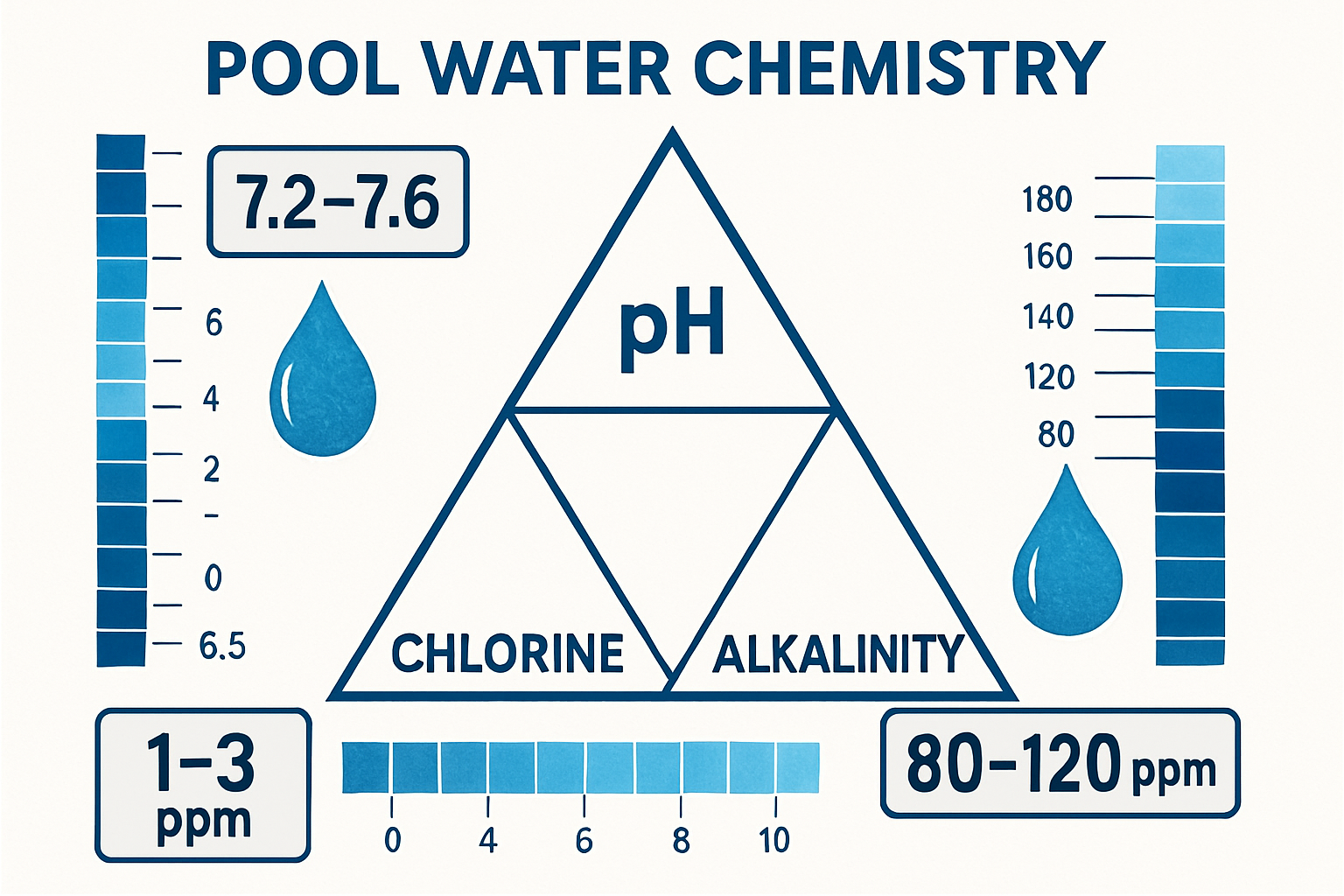
• The three pillars of pool chemistry—pH, chlorine, and alkalinity—must work together in harmony for optimal water safety
• Regular testing and adjustment (2-3 times per week) is essential, especially in Riverside's hot climate where chemicals deplete faster
• Professional balancing saves money long-term by preventing costly equipment damage and reducing chemical waste
• Safety protocols are non-negotiable when handling pool chemicals to prevent accidents and ensure effective treatment
What Is Pool Chemical Balancing?
Pool chemical balancing is the science and art of maintaining the correct levels of various chemicals in your swimming pool water to ensure it's safe, clean, and comfortable for swimmers. Think of it as creating the perfect recipe—too much or too little of any ingredient can ruin the entire batch.
The core components of pool chemical balancing include:
• pH levels (7.2-7.6 ideal range)
• Chlorine concentration (1-3 parts per million)
• Total alkalinity (80-120 ppm)
• Calcium hardness (150-300 ppm)
• Cyanuric acid (30-50 ppm for outdoor pools)
When these elements are properly balanced, they work together to create a synergistic effect that keeps your pool water sparkling clean and safe for swimming. The process involves regular testing, careful chemical additions, and ongoing monitoring to maintain optimal levels.
Why Pool Chemical Balancing Matters in Riverside, CA
Living in Riverside, CA, presents unique challenges for pool maintenance that make proper chemical balancing even more critical. Our desert climate and intense UV exposure create conditions that can rapidly throw pool chemistry out of whack.
Climate-Specific Challenges
High temperatures in Riverside (often exceeding 100°F in summer) accelerate chemical reactions and increase evaporation rates. This means:
• Chlorine depletes faster due to UV degradation
• pH levels can swing more dramatically
• Algae growth accelerates in warm water
• Bather load increases during hot weather
Health and Safety Implications
Improperly balanced pool water can lead to serious health issues, including:
• Eye and skin irritation from incorrect pH levels
• Respiratory problems from chloramine formation
• Bacterial infections from inadequate sanitization
• Chemical burns from over-chlorination
"In my 15 years of pool service in Riverside, I've seen how quickly our intense sun and heat can turn a perfectly balanced pool into a chemistry nightmare. Regular monitoring isn't just recommended—it's essential." – Local Pool Professional
How Pool Chemical Balancing Works: The Science Behind Safe Water
Understanding the chemistry behind pool water balancing helps you appreciate why each component matters and how they interact with each other.
The pH Factor
pH measures how acidic or basic your water is on a scale from 0-14. For pools, the sweet spot is 7.2-7.6—slightly alkaline but close to neutral.
When pH is too low (acidic):
• Water becomes corrosive to pool equipment
• Chlorine works too aggressively, causing skin/eye irritation
• Metal components can stain or deteriorate
When pH is too high (basic):
• Chlorine becomes less effective
• Water turns cloudy
• Scale formation on surfaces and equipment
Chlorine: Your Primary Sanitizer
Chlorine serves as your pool's primary defense against harmful bacteria, viruses, and algae. But it's not just about adding chlorine—it's about maintaining free available chlorine at optimal levels.
The chlorine process works through:
- Hypochlorous acid formation when chlorine dissolves in water
- Oxidation of contaminants including bacteria and organic matter
- Continuous sanitization as long as adequate levels are maintained
Total Alkalinity: The pH Buffer
Total alkalinity acts as a buffer system that prevents rapid pH changes. Think of it as your pool's shock absorber for chemical fluctuations.
Proper alkalinity levels:
• Stabilize pH levels
• Improve chlorine efficiency
• Prevent equipment corrosion
• Enhance swimmer comfort
Common Pool Chemical Balancing Problems and Mistakes
Even experienced pool owners can fall into chemical balancing traps that compromise water safety and quality. Here are the most frequent issues I encounter in Riverside pools:
The "Shock and Hope" Method
Many pool owners think adding more chlorine will solve any water problem. This approach often backfires by:
• Creating chloramine buildup (that strong "chlorine" smell)
• Causing skin and eye irritation
• Masking underlying pH or alkalinity issues
• Wasting money on unnecessary chemicals
Ignoring Test Results
Testing without acting is like checking your bank balance but never paying bills. Common testing mistakes include:
• Testing only once per week (insufficient for Riverside's climate)
• Using expired test strips or reagents
• Testing at the wrong time of day
• Not recording results to track trends
Chemical Addition Errors
Improper chemical addition can create dangerous conditions:
• Adding chemicals directly to the pool without pre-dissolving
• Mixing different chemicals together
• Adding chemicals during peak swimming times
• Not allowing proper circulation time between additions
Seasonal Neglect
Riverside's year-round swimming season means chemical balancing never stops. Winter neglect leads to:
• Algae blooms when temperatures rise
• Equipment damage from unbalanced water
• Costly spring restoration processes
• Extended downtime when you want to swim
Pool Chemical Balancing Costs, Pricing, and Factors
Understanding the financial aspects of pool chemical balancing helps you budget effectively and make informed decisions about DIY versus professional service.
Monthly Chemical Costs
Typical monthly chemical expenses for Riverside pools range from $30-80, depending on:
• Pool size and volume
• Bather load and usage frequency
• Seasonal weather conditions
• Current water chemistry status
• Quality of chemicals used
Factors Affecting Chemical Costs
Pool Size and Volume
Larger pools require more chemicals, but the cost per gallon often decreases due to economies of scale.
Usage Patterns
• Heavy bather loads increase chemical demand
• Pool parties and events require additional treatment
• Pet swimming affects chemical balance
• Outdoor entertaining increases contamination
Environmental Factors
• Wind-blown debris increases chemical consumption
• Rain dilutes existing chemicals
• Intense UV exposure accelerates chlorine loss
• High temperatures speed up chemical reactions
Hidden Costs of Poor Balancing
Equipment replacement from corrosive or scaling water can cost thousands:
• Pool pump and motor damage: $800-2,500
• Heater element replacement: $300-1,200
• Filter system repairs: $200-800
• Surface refinishing: $3,000-8,000
DIY vs. Professional Pool Chemical Balancing
The decision between managing pool chemicals yourself or hiring professionals involves weighing costs, time, expertise, and safety considerations.
DIY Chemical Balancing
Advantages:
• Lower ongoing costs
• Complete control over timing and products
• Learning opportunity about pool chemistry
• Immediate response to problems
Challenges:
• Requires consistent time investment (2-3 hours weekly)
• Need for accurate testing equipment
• Chemical storage and safety concerns
• Troubleshooting complex chemistry problems
• Risk of costly mistakes
Professional Pool Service
Benefits of professional chemical balancing:
• Expertise and experience in handling complex chemistry issues
• Consistent monitoring regardless of your schedule
• Professional-grade chemicals and testing equipment
• Safety protocols for chemical handling and storage
• Problem prevention through early detection
• Equipment protection through proper water balance
Investment considerations:
Professional service typically costs $80-150 monthly but often pays for itself through:
• Reduced chemical waste
• Extended equipment life
• Prevented emergency repairs
• Time savings for busy homeowners
Frequently Asked Questions About Pool Chemical Balancing
How often should I test my pool water in Riverside?
Test your pool water 2-3 times per week during swimming season, and at least once weekly during cooler months. Riverside's intense UV exposure and high temperatures accelerate chemical depletion, making frequent testing essential for safe water.
What's the most important chemical level to monitor?
Free chlorine and pH are equally critical and should be tested together. Chlorine provides sanitization, while pH affects chlorine efficiency and swimmer comfort. Neither works properly without the other being in balance.
Can I swim immediately after adding chemicals?
Wait times depend on the chemical added:
• Chlorine: 30 minutes to 4 hours depending on amount
• pH adjusters: 30 minutes with circulation
• Shock treatments: 8-24 hours
• Algaecides: Follow manufacturer instructions (usually 15-30 minutes)
Why does my pool smell strongly of chlorine?
Strong chlorine odor actually indicates insufficient free chlorine and the presence of chloramines (combined chlorine). This happens when chlorine binds with contaminants instead of remaining free to sanitize. The solution is shock treatment to break chloramine bonds.
How do I handle chemical balancing during Riverside's monsoon season?
Heavy rains require immediate attention:
• Test water immediately after storms
• Expect diluted chemical levels
• Check for debris and contamination
• Adjust chemicals gradually over 24-48 hours
• Run filtration system continuously until balance is restored
What chemicals should I never mix together?
Never mix these chemical combinations:
• Chlorine and acid (creates toxic chlorine gas)
• Different types of chlorine products
• Chlorine and algaecide simultaneously
• Pool shock with other chemicals
Always add chemicals separately with circulation time between additions.
How does Riverside's hard water affect chemical balancing?
Riverside's naturally hard water (high calcium content) affects chemical balancing by:
• Requiring more frequent calcium hardness monitoring
• Increasing scale formation potential
• Affecting pH stability
• Reducing chlorine efficiency
Regular testing and professional water analysis help manage hard water challenges.
When should I completely replace my pool water?
Consider water replacement when:
• Total dissolved solids exceed 3,000 ppm
• Cyanuric acid levels exceed 100 ppm
• Repeated algae problems despite proper treatment
• Chemical balancing becomes increasingly difficult
• Water has an off-putting taste or odor that won't resolve
When to Call a Professional for Pool Chemical Balancing
Recognizing when to seek professional help can prevent minor chemistry issues from becoming major problems or safety hazards.
Emergency Situations
Contact a professional immediately for:
• Green or black water indicating severe algae growth
• Chemical burns or injuries from improper handling
• Equipment damage from corrosive water conditions
• Persistent cloudiness despite multiple treatment attempts
• Strong chemical odors that won't dissipate
Ongoing Challenges
Consider professional service when:
• You're consistently struggling to maintain proper levels
• Chemical costs seem excessive for your pool size
• You lack time for regular testing and maintenance
• Equipment problems keep recurring
• You're planning extended travel or vacations
Seasonal Transitions
Professional help is valuable during:
• Spring opening after winter closure
• Fall winterization preparation
• Equipment installation or replacement
• Major weather events like storms or extreme heat waves
Safety Concerns
Professional expertise is essential for:
• Chemical storage and handling questions
• Complex water chemistry problems
• Equipment malfunction diagnosis
• Health-related water quality issues
• Compliance with local health regulations
Related Pool Services and Maintenance
Pool chemical balancing works best as part of a comprehensive maintenance program. Understanding related services helps you maintain optimal pool conditions year-round.
Complementary Services
Weekly Pool Cleaning
Regular debris removal and surface cleaning support chemical efficiency by reducing organic load and contamination sources.
Filter Maintenance
Clean filters ensure proper water circulation, which is essential for even chemical distribution and effective sanitization.
Equipment Inspections
Regular equipment checks prevent malfunctions that can disrupt chemical balance and water circulation.
Water Testing and Analysis
Professional water testing provides detailed analysis beyond basic chemical levels, including mineral content and water quality factors.
Preventive Maintenance
Brush and Vacuum Services
Regular brushing prevents algae attachment and ensures chemicals reach all pool surfaces effectively.
Tile and Surface Cleaning
Clean surfaces prevent biofilm formation and maintain the aesthetic appeal of properly balanced water.
Drain and Refill Services
Periodic water replacement refreshes your pool's chemistry and removes accumulated dissolved solids.
Conclusion: Maintaining Safe, Balanced Pool Water in Riverside
Pool chemical balancing isn't just about maintaining crystal-clear water—it's about creating a safe, healthy environment for you and your family to enjoy. In Riverside's challenging climate, proper chemical balance becomes even more critical due to intense UV exposure, high temperatures, and year-round swimming seasons.
The key to successful pool chemical balancing lies in consistent monitoring, proper technique, and understanding the science behind water chemistry. Whether you choose to manage chemicals yourself or work with professionals, the fundamentals remain the same: regular testing, gradual adjustments, and safety-first protocols.
Your next steps for optimal pool chemical balancing:
- Establish a testing routine appropriate for Riverside's climate (2-3 times weekly)
- Invest in quality testing equipment or consider professional service
- Learn proper chemical handling and storage techniques
- Keep detailed records of test results and chemical additions
- Address problems quickly before they become expensive repairs
Remember, properly balanced pool water protects not only your health and comfort but also your significant investment in pool equipment and infrastructure. In Riverside's unique environment, this protection is especially valuable given our extended swimming season and challenging weather conditions.
If you're feeling overwhelmed by the complexity of pool chemistry or simply want the peace of mind that comes with professional expertise, consider consulting with local pool professionals who understand Riverside's specific challenges and can help you maintain safe, beautiful pool water year-round.
References
[1] Centers for Disease Control and Prevention. "Pool Chemical Safety." CDC Healthy Swimming Program, 2025.
[2] National Swimming Pool Foundation. "Pool & Spa Water Chemistry Guidelines." NSPF Technical Standards, 2025.
[3] Association of Pool & Spa Professionals. "Residential Pool Maintenance Standards." APSP Guidelines, 2025.
[4] California Department of Public Health. "Swimming Pool Water Quality Standards." CDPH Environmental Health, 2025.
SEO Meta Title: Pool Chemical Balancing Guide 2025 | Safe Water Tips Riverside CA
SEO Meta Description: Expert guide to pool chemical balancing for safe swimming water. Learn proper pH, chlorine & alkalinity levels for Riverside CA pools. Professional tips included.