Pool Pump & Filter Maintenance: Complete Troubleshooting and Maintenance Guide for Riverside Pool Owners
Picture this: you walk out to your beautiful backyard pool on a perfect Riverside morning, only to find murky water and a silent pump that should be humming with life. Pool pump and filter maintenance isn't just about keeping your water crystal clear—it's about protecting your investment and ensuring your family's safety. As someone who's helped countless Riverside homeowners navigate the complexities of pool equipment care, I can tell you that understanding pool pump & filter maintenance troubleshooting and maintenance of pumps and filters is absolutely crucial for every pool owner in our desert climate.
Key Takeaways
• Regular maintenance prevents 80% of pool pump and filter failures, saving thousands in emergency repairs
• Riverside's hard water and high temperatures create unique challenges requiring specialized maintenance approaches
• Professional inspections every 6 months can extend equipment life by 3-5 years
• Energy-efficient pump operation can reduce monthly utility bills by 30-50%
• Proper filter cleaning schedules maintain water quality and reduce chemical dependency
What Is Pool Pump & Filter Maintenance?
Pool pump and filter maintenance encompasses the systematic care, cleaning, and troubleshooting of your pool's circulation system—the heart of your swimming pool. Your pump moves thousands of gallons of water daily, while your filter removes debris, contaminants, and microscopic particles that could turn your oasis into a health hazard.
The pump serves as your pool's circulatory system, much like a heart pumps blood through your body. It draws water from your pool through the skimmer and main drain, pushes it through the filter system, and returns clean water back to your pool. Filter systems—whether sand, cartridge, or diatomaceous earth (DE)—trap everything from leaves and insects to bacteria and algae.
In Riverside's challenging environment, this equipment works overtime. Our hard water contains high mineral content that can clog systems faster than in other regions. The intense summer heat means your pump runs longer hours, and our occasional windstorms dump extra debris into pools, putting additional strain on filtration systems.
Why Pool Pump & Filter Maintenance Matters in Riverside, CA
Living in Riverside presents unique challenges that make pool pump & filter maintenance troubleshooting and maintenance of pumps and filters absolutely critical. Our desert climate creates conditions that can quickly overwhelm poorly maintained equipment.
Climate-Specific Challenges
High temperatures in Riverside often exceed 100°F during summer months, causing pumps to work harder and filters to clog faster. The intense heat accelerates algae growth, meaning your filtration system must process more contaminants than pools in cooler climates.
Hard water is another significant factor. Riverside's water supply contains high levels of calcium and magnesium, which create scale buildup in pump housings and filter elements. This mineral accumulation reduces efficiency and can cause premature equipment failure.
Seasonal wind patterns bring dust, pollen, and debris that can overwhelm filtration systems. During Santa Ana wind events, pools can collect weeks' worth of debris in just hours, putting extraordinary stress on pump and filter systems.
Economic Impact
Neglecting pool pump and filter maintenance in our climate can cost homeowners thousands of dollars. A failed pump motor replacement can cost $800-1,500, while a complete filter system overhaul might run $1,200-2,500. Regular maintenance typically costs $200-400 annually—a fraction of emergency repair expenses.
Energy costs also skyrocket with poorly maintained equipment. A clogged filter forces your pump to work harder, potentially increasing electricity bills by 40-60% during peak summer months when energy rates are highest.
How Pool Pump & Filter Systems Work
Understanding your equipment helps you identify problems early and communicate effectively with service professionals. Pool circulation systems operate on relatively simple principles, but each component plays a crucial role.
The Pump System
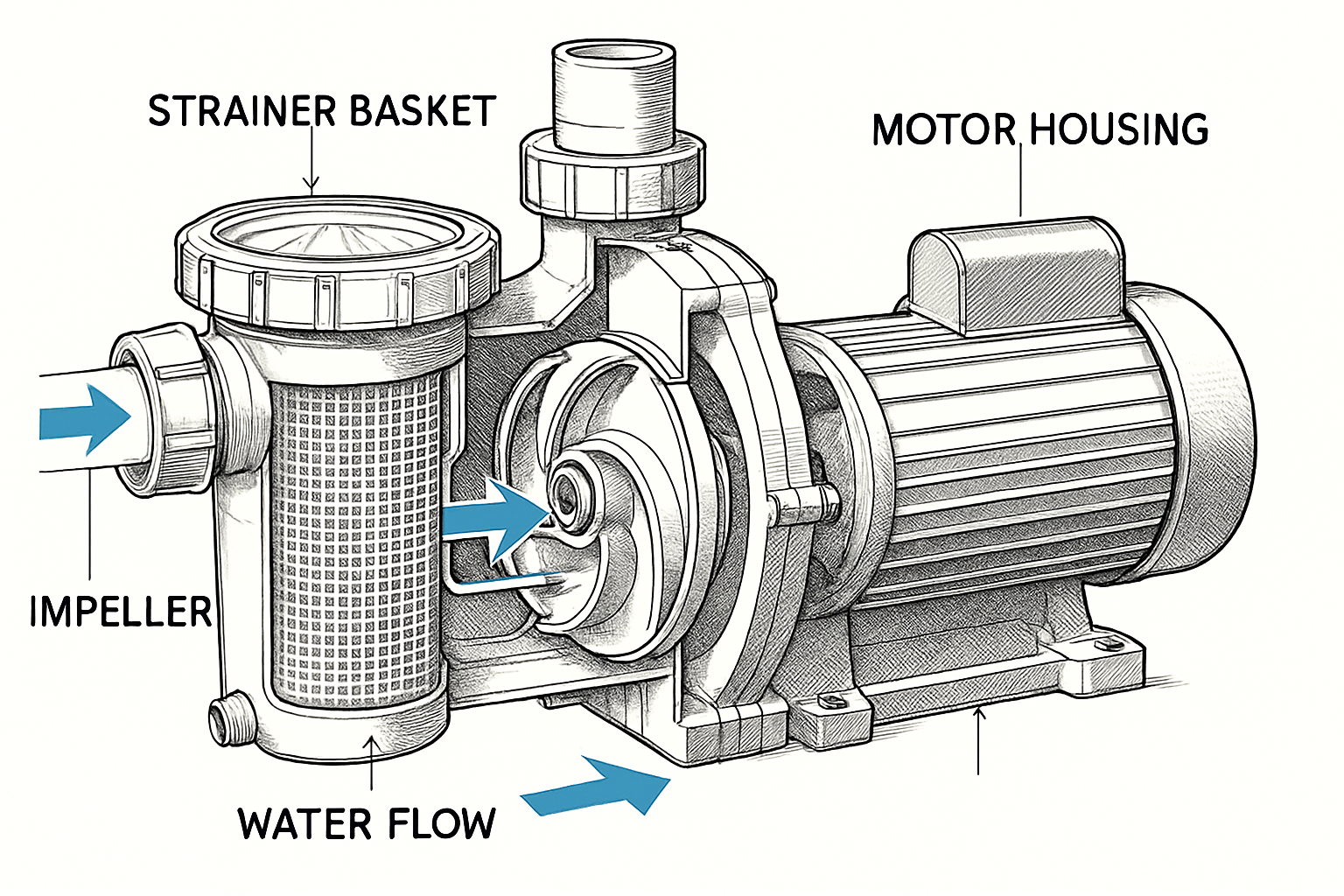
Your pool pump consists of several key components:
- Motor: Provides power to drive the impeller
- Impeller: Creates suction and pressure to move water
- Strainer basket: Catches large debris before it reaches the impeller
- Pump housing: Contains the impeller and connects to plumbing
- Seal assembly: Prevents water from entering the motor
Water flow begins at your pool's skimmer and main drain. The pump creates suction that draws water through these intake points, through the strainer basket, and into the impeller housing. The spinning impeller pushes water under pressure through your filter system and back to the pool via return jets.
Filter Types and Functions
Sand filters use specially graded sand to trap particles as small as 20-40 microns. Water flows down through the sand bed, leaving contaminants behind. Backwashing reverses water flow to clean the sand.
Cartridge filters use pleated fabric elements to capture particles down to 10-15 microns. These require manual removal and cleaning but offer superior filtration for smaller pools.
DE (Diatomaceous Earth) filters provide the finest filtration, capturing particles as small as 2-5 microns. They use fossilized diatoms coated on fabric grids, requiring periodic cleaning and fresh DE powder.
Common Pool Pump & Filter Problems and Troubleshooting
Pool pump & filter maintenance troubleshooting and maintenance of pumps and filters often involves identifying and addressing recurring issues before they become major problems. Here are the most common problems Riverside pool owners face:
Pump Won't Start or Stops Running
Electrical issues top the list of pump problems. Check your circuit breaker first—Riverside's high electrical demand during summer can trip breakers. Examine the pump's electrical connections for corrosion, which our mineral-rich water accelerates.
Overheating frequently occurs when pumps work too hard against clogged filters or blocked impellers. If your pump starts but shuts off after a few minutes, it's likely overheating due to restricted water flow.
Priming problems prevent pumps from moving water effectively. Air leaks in suction lines, low water levels, or clogged skimmer baskets can cause loss of prime. You'll hear the motor running but see little or no water movement.
Filter Performance Issues
Rapid clogging indicates your filter is working but overwhelmed by debris load. In Riverside's dusty environment, cartridge filters may need cleaning every 2-3 weeks instead of monthly.
Poor water clarity despite regular cleaning suggests filter elements need replacement or your filtration capacity is insufficient for your pool size and usage.
High pressure readings on sand and DE filters indicate it's time for backwashing or cleaning. Pressure 8-10 PSI above normal operating pressure means reduced flow and efficiency.
Flow and Circulation Problems
Weak water flow from return jets often indicates clogged filter elements, blocked impellers, or air leaks. Gurgling sounds suggest air entering the system through loose connections or cracked pipes.
Uneven circulation creates dead spots where algae can grow. This might indicate incorrectly positioned return jets or insufficient pump capacity for your pool's size and features.
Pool Pump & Filter Maintenance Costs and Pricing Factors
Understanding maintenance costs helps you budget appropriately and recognize when you're getting fair pricing for services. Several factors influence pool pump & filter maintenance expenses in the Riverside area.
Routine Maintenance Costs
Professional monthly service typically ranges from $80-150 in Riverside, depending on pool size and service level. This usually includes filter cleaning, chemical balancing, and equipment inspection.
DIY maintenance costs include replacement filter cartridges ($30-80 each), pump baskets ($15-25), and cleaning supplies ($20-40 monthly). Annual expenses for DIY maintenance typically run $300-600.
Energy costs represent a significant ongoing expense. Well-maintained pumps consume 30-50% less electricity than neglected equipment. With Riverside's high summer energy rates, this can mean $50-100 monthly savings.
Repair and Replacement Costs
Pump motor replacement costs $600-1,200 for standard single-speed units, while variable-speed motors run $800-1,800. Complete pump replacement ranges from $400-800 for basic units to $1,200-2,500 for high-efficiency variable-speed models.
Filter system replacement varies significantly by type. Cartridge filter housings cost $200-600, sand filters run $300-800, and DE filters range from $400-1,200.
Cost-Influencing Factors
Pool size directly impacts maintenance costs. Larger pools require bigger pumps, more filter capacity, and longer run times. Usage frequency affects how often filters need cleaning and replacement.
Water quality in your specific Riverside neighborhood influences costs. Areas with particularly hard water may require more frequent equipment servicing and earlier replacement.
Equipment age and quality significantly impact maintenance expenses. High-quality equipment costs more initially but typically requires less frequent repairs and operates more efficiently.
DIY vs Professional Pool Pump & Filter Maintenance
Deciding between DIY maintenance and professional service depends on your comfort level, available time, and technical skills. Both approaches have distinct advantages and limitations.
DIY Maintenance Advantages
Cost savings represent the primary benefit of self-maintenance. You'll save $80-150 monthly on service fees, though you'll still need to purchase supplies and replacement parts.
Immediate response to problems means you don't wait for service appointments. When your pump stops working on a Friday evening, you can troubleshoot immediately rather than waiting until Monday.
Learning opportunity helps you understand your equipment better. This knowledge proves valuable when communicating with repair technicians or making equipment upgrade decisions.
Professional Service Benefits
Expertise and experience help identify problems early. Professional technicians recognize subtle signs of impending equipment failure that homeowners typically miss.
Proper tools and equipment ensure thorough maintenance. Professionals have specialized tools for tasks like impeller removal, pressure testing, and electrical diagnosis.
Warranty protection often requires professional maintenance. Many equipment warranties become void if homeowners perform certain repairs or modifications.
Time savings can be substantial. Professional maintenance takes 30-45 minutes versus 2-3 hours for inexperienced homeowners.
Safety Considerations
Electrical hazards pose serious risks when working with pool equipment. Pumps operate on 220-volt circuits that can cause severe injury or death. Water and electricity create particularly dangerous combinations.
Chemical exposure during filter cleaning requires proper protective equipment and ventilation. Pressure systems in filters can cause injury if not properly relieved before maintenance.
Professional liability means service companies carry insurance for accidents or equipment damage. DIY mistakes could result in expensive repairs not covered by homeowner's insurance.
When to Call a Professional for Pool Pump & Filter Maintenance
Recognizing when professional intervention is necessary can prevent minor issues from becoming major expenses. Certain situations require immediate professional attention, while others can wait for scheduled service.
Emergency Situations
Electrical problems always require professional attention. If your pump trips circuit breakers repeatedly, shows signs of electrical arcing, or has damaged wiring, shut off power immediately and call a qualified technician.
Motor bearing failure creates loud grinding or squealing noises. Continued operation can cause complete motor failure and potential safety hazards. Seal leaks that allow water near electrical components also require immediate professional service.
Pressure system failures in filters can be dangerous. If pressure gauges show extremely high readings or you notice bulging filter housings, shut down the system and call for service.
Routine Professional Services
Annual equipment inspections help identify wear patterns and potential problems before they cause failures. Professionals can test electrical connections, measure pump performance, and assess filter condition.
Motor rebuilds and impeller replacement require specialized tools and expertise. These services typically cost less than complete replacement and extend equipment life significantly.
System upgrades to variable-speed pumps or high-efficiency filters often require professional installation to ensure proper operation and warranty coverage.
Seasonal Considerations
Spring startup after winter shutdown benefits from professional inspection. Technicians can identify freeze damage, verify proper operation, and optimize settings for the coming season.
Winterization services protect equipment from Riverside's occasional freezing temperatures. Professional winterization prevents costly freeze damage to pumps and filter housings.
Frequently Asked Questions About Pool Pump & Filter Maintenance
How often should I clean my pool filter?
Cartridge filters in Riverside typically need cleaning every 2-3 weeks during swimming season due to our dusty environment. Sand filters should be backwashed when pressure rises 8-10 PSI above normal operating pressure, usually every 4-6 weeks. DE filters need cleaning every 6-8 weeks or when pressure increases significantly.
Why does my pump keep losing prime?
Prime loss usually indicates air entering the suction system. Check for low water levels, clogged skimmer baskets, loose pump lid, or cracked suction lines. Hard water minerals can also cause pump lid O-rings to deteriorate faster in Riverside, creating air leaks.
How long should I run my pool pump daily?
Turnover time should be 8-10 hours daily during summer months in Riverside. Your pump should circulate your entire pool volume at least once daily. Variable-speed pumps can run longer at lower speeds for better filtration and energy efficiency.
What causes high filter pressure?
Clogged filter elements are the most common cause of high pressure. Algae growth, mineral buildup from hard water, and excessive debris all contribute to rapid filter clogging in our climate. Backwash sand and DE filters or clean cartridge filters when pressure rises 8-10 PSI above normal.
Should I upgrade to a variable-speed pump?
Variable-speed pumps offer significant energy savings in Riverside's high-rate electricity market. They typically reduce energy consumption by 30-70% while providing better filtration. Rebates from local utilities often offset much of the initial cost difference.
How do I know if my pump motor is failing?
Warning signs include unusual noises (grinding, squealing), frequent circuit breaker trips, reduced water flow, overheating, or visible damage to electrical connections. Bearing wear and seal failure are common in our hard water environment.
Can I repair pool equipment myself?
Basic maintenance like cleaning filters and replacing pump baskets is safe for homeowners. However, electrical work, motor repairs, and pressure system modifications should be left to professionals for safety and warranty reasons.
What's the lifespan of pool equipment in Riverside?
Pump motors typically last 8-12 years with proper maintenance in our climate. Filter housings can last 15-20 years, while filter elements need replacement every 1-2 years for cartridges and 5-7 years for sand. Hard water and high temperatures can reduce these lifespans without proper maintenance.
Conclusion: Protecting Your Pool Investment Through Proper Maintenance
Pool pump & filter maintenance troubleshooting and maintenance of pumps and filters isn't just about keeping your water clean—it's about protecting a significant investment while ensuring your family's safety and enjoyment. In Riverside's challenging climate, proper maintenance becomes even more critical due to our hard water, extreme temperatures, and dusty conditions.
The key to successful pool equipment maintenance lies in understanding your system, following regular maintenance schedules, and knowing when to call professionals. Preventive care costs a fraction of emergency repairs and keeps your pool ready for enjoyment year-round.
Regular filter cleaning, proper pump operation, and professional inspections will extend equipment life, reduce energy costs, and maintain water quality. Remember that safety always comes first—electrical and pressure system work should be left to qualified professionals.
Next Steps for Riverside Pool Owners
Start by assessing your current maintenance routine. Are you cleaning filters regularly? Is your pump running efficiently? When was your last professional inspection?
Create a maintenance schedule that works for your lifestyle and budget. Whether you choose DIY maintenance or professional service, consistency is key to preventing problems.
Consider equipment upgrades that can reduce long-term costs. Variable-speed pumps and high-efficiency filters often pay for themselves through energy savings and reduced maintenance requirements.
If you're experiencing equipment problems or haven't had a professional inspection recently, don't wait for a complete failure. Early intervention almost always costs less than emergency repairs and keeps your pool enjoyable throughout Riverside's long swimming season.
Your pool should be a source of relaxation and enjoyment, not stress and unexpected expenses. With proper pool pump & filter maintenance, you can ensure years of trouble-free operation while protecting your investment in your backyard oasis.
References
[1] National Swimming Pool Foundation. "Pool Equipment Maintenance Guidelines." 2025.
[2] California Energy Commission. "Pool Pump Energy Efficiency Standards." 2025.
[3] Association of Pool & Spa Professionals. "Water Quality Standards and Testing Procedures." 2025.
SEO Meta Title: Pool Pump & Filter Maintenance Guide | Riverside CA 2025
Meta Description: Complete pool pump & filter maintenance guide for Riverside homeowners. Expert troubleshooting tips, cost breakdowns, and professional maintenance advice for 2025.