The Ultimate Guide to Pool Safety & Compliance: Protecting Your Family and Meeting Legal Requirements in 2026
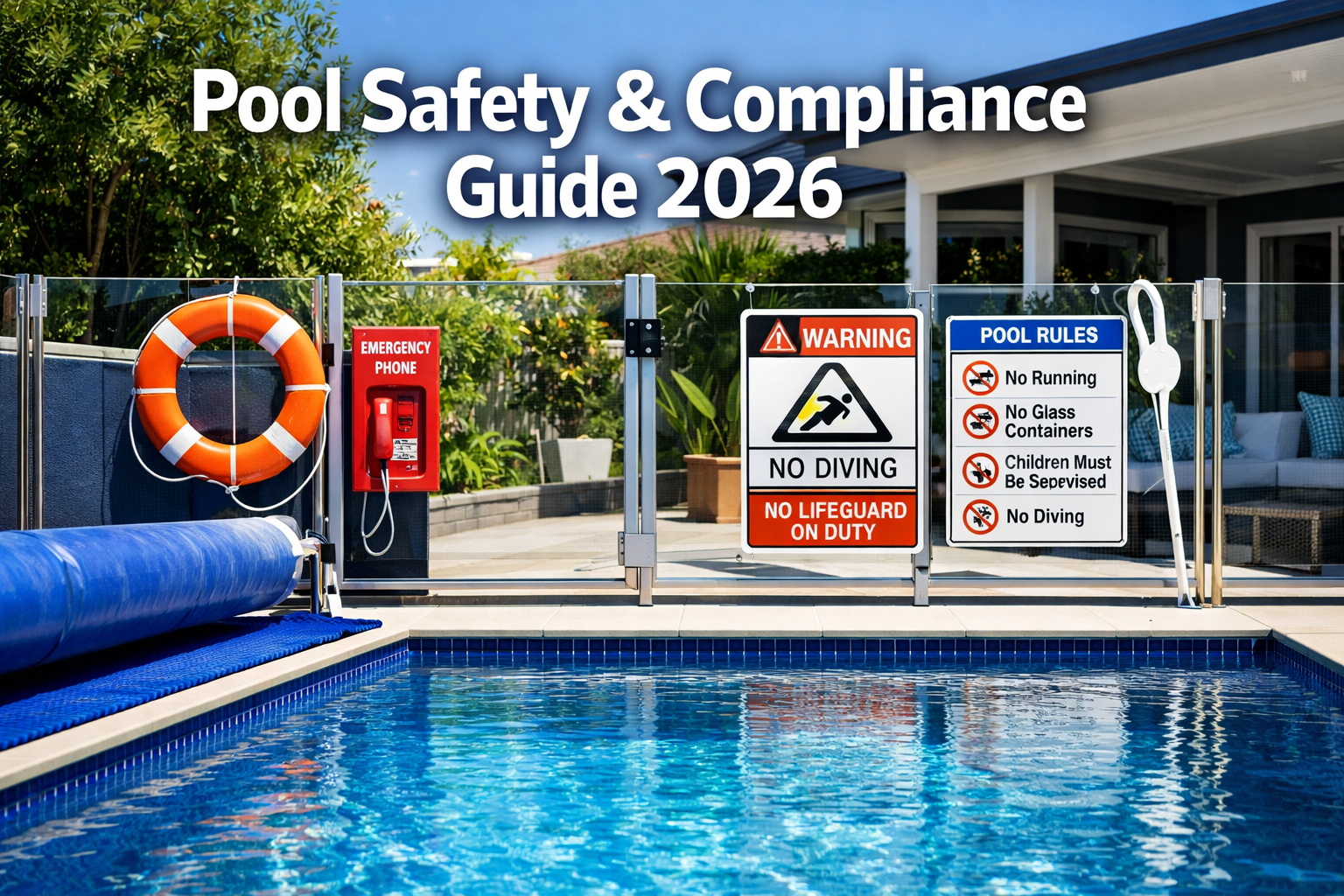
Picture this: It’s a beautiful summer evening in Corona, and your family is enjoying a barbecue by your sparkling pool. Suddenly, you hear a splash and realize your neighbor’s toddler has wandered into your yard and fallen into the water. This nightmare scenario happens more often than you might think – drowning is the leading cause of death for children ages 1-4, and most incidents occur in residential pools. Pool Safety & Compliance isn’t just about following the law; it’s about creating a secure environment that protects lives while ensuring you meet all legal requirements in 2026.
Key Takeaways
• Legal barriers are mandatory: Most states require 4-foot minimum fencing with self-closing, self-latching gates for all residential pools
• Compliance varies by location: Pool safety requirements differ significantly between states, with some requiring additional alarms, covers, or bonding systems
• New installations face stricter rules: Recent regulations in California and other states have increased safety requirements for new pools and major renovations
• Multiple safety layers work best: Combining barriers, alarms, covers, and proper maintenance creates the most effective protection
• Regular inspections prevent violations: Annual safety audits help ensure ongoing compliance and identify potential hazards before accidents occur
Understanding Pool Safety & Compliance Requirements by State
New Jersey Pool Safety Standards
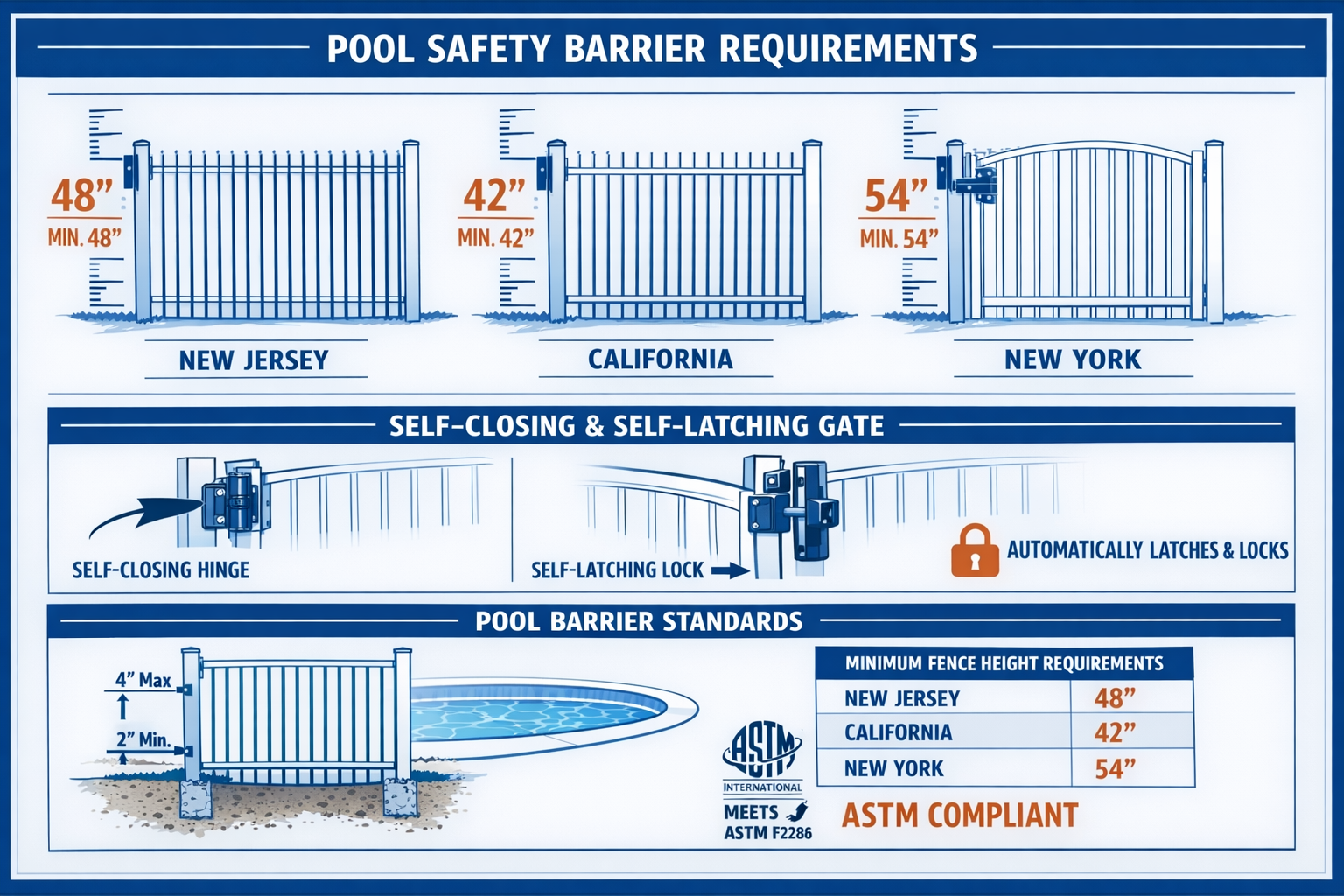
New Jersey has established some of the most comprehensive Pool Safety & Compliance regulations in the nation. The state requires all pool barriers to meet specific height and construction standards based on the International Swimming Pool and Spa Code (ISPSC).
Key New Jersey Requirements:
- Fence Height: Minimum 48 inches (4 feet) above ground level, measured from the side facing away from the pool [1]
- Window and Door Alarms: All operable windows with sill heights less than 48 inches and doors near pools must have UL 2017-compliant alarms [1]
- Safety Cover Alternative: ASTM F1346-compliant safety covers can serve as alternative barriers [1]
- Mandatory Compliance: Required for all new installations and existing pools undergoing significant renovations [1]
New York Pool Safety Regulations
New York’s approach to Pool Safety & Compliance emphasizes comprehensive barrier protection and electrical safety measures.
Essential New York Standards:
- Universal Barrier Requirement: All pools capable of containing water more than 24 inches deep must have barrier enclosures [2]
- Alarm Systems: Mandatory for pools constructed or modified after December 14, 2006 [2]
- Latch Height Specifications: Self-latching devices must have releases positioned no higher than 54 inches above ground [2]
- Electrical Bonding: All permanent metal parts within 5 feet horizontally and 12 feet vertically of the pool must be bonded [2]
California’s Enhanced Safety Requirements
California has significantly strengthened its Pool Safety & Compliance standards with the Swimming Pool Safety Act (SPSA), effective since January 1, 2018.
California’s Updated Requirements:
- Building Permit Triggers: Enhanced safety measures required when permits are pulled or homes are sold [3]
- ASTM Standards: Compliance with F2286 for mesh fencing and F1346 for safety covers [3]
- Specialized Facility Standards: Foster care and daycare facilities require 60-inch tall mesh fencing with key-lockable gates [3]
- Heating Restrictions: As of January 1, 2026, gas heating prohibited for new pool heating installations [5]
“The most effective pool safety strategy combines multiple layers of protection. No single safety measure should be relied upon exclusively.” – National Pool Safety Council
Essential Pool Safety Equipment and Installation
Barrier Systems and Fencing Options
Proper barriers form the foundation of effective Pool Safety & Compliance. Understanding your options helps you choose the most appropriate system for your property.
Fence Material Options:
| Material Type | Pros | Cons | Cost Range |
|---|---|---|---|
| Mesh Fencing | Removable, transparent, ASTM F2286 compliant | Requires professional installation | $15-25/linear foot |
| Aluminum | Durable, low maintenance, attractive | Higher upfront cost | $25-40/linear foot |
| Vinyl | Weather-resistant, variety of styles | Can become brittle over time | $20-30/linear foot |
| Wood | Natural appearance, customizable | Requires regular maintenance | $15-35/linear foot |
Gate Hardware and Latch Systems
Self-closing, self-latching gates represent a critical component of Pool Safety & Compliance. Proper installation and maintenance ensure these systems function reliably when needed most.
Gate Requirements Checklist:
✅ Self-Closing Mechanism: Gate must close completely from any open position
✅ Self-Latching Hardware: Latch must engage automatically without manual assistance
✅ Proper Height: Latch release positioned 54 inches or lower above ground level
✅ Gap Specifications: No gap greater than 4 inches between gate and posts
✅ Opening Direction: Gates should open away from the pool area
Pool Alarms and Detection Systems
Modern alarm systems provide an additional layer of protection in your Pool Safety & Compliance strategy. These devices can detect unauthorized pool access or water disturbance.
Types of Pool Alarms:
Perimeter Alarms 🚨
- Detect movement through fence gates or doors
- Battery-powered options available
- Range: $100-$300 per unit
Surface Wave Alarms 🌊
- Monitor water surface disturbances
- Adjustable sensitivity settings
- Range: $200-$500 per unit
Subsurface Alarms 💧
- Detect underwater movement patterns
- More sophisticated detection algorithms
- Range: $400-$800 per unit
Wearable Alarms ⌚
- Personal devices for children
- Water immersion detection
- Range: $50-$150 per device
Safety Covers and Automated Systems
ASTM F1346 Compliant Safety Covers
Safety covers that meet ASTM F1346 standards can serve as primary barriers in many jurisdictions, making them valuable components of Pool Safety & Compliance programs.
Safety Cover Benefits:
- Structural Integrity: Must support 485 pounds distributed across 2 square feet
- Gap Limitations: Maximum 4-inch gaps around perimeter
- Labeling Requirements: Must display ASTM F1346 compliance certification
- Professional Installation: Requires proper anchoring and tensioning systems
Automatic Pool Covers
Automatic covers provide convenience while maintaining safety standards. These systems can be integrated into comprehensive Pool Safety & Compliance solutions.
Automatic Cover Advantages:
- Daily Use Practicality: Easy operation encourages consistent use
- Energy Efficiency: Reduces heating costs and chemical consumption
- Debris Protection: Keeps pool clean when not in use
- Safety Integration: Many models meet ASTM F1346 requirements
Electrical Safety and Bonding Requirements
Electrical safety represents a critical aspect of Pool Safety & Compliance that often receives insufficient attention from pool owners.
Bonding System Requirements
Proper electrical bonding prevents dangerous voltage differences that could cause electrocution. New York’s regulations provide a clear example of comprehensive bonding requirements.
Bonding Specifications:
- Horizontal Distance: All metal within 5 feet of pool edge must be bonded [2]
- Vertical Distance: Metal components within 12 feet above maximum water level require bonding [2]
- Included Components: Railings, siding, awnings, window frames, and fences [2]
- Barrier Exceptions: Permanent barriers can separate unbonded metal from pool area [2]
GFCI Protection
Ground Fault Circuit Interrupter (GFCI) protection provides essential electrical safety for pool equipment and lighting systems.
GFCI Requirements:
- Pool Equipment: All pumps, heaters, and electrical devices
- Lighting Systems: Underwater and perimeter lighting
- Outlet Protection: All receptacles within 20 feet of pool
- Regular Testing: Monthly GFCI function verification recommended
Maintenance and Ongoing Compliance
Regular Safety Inspections
Maintaining Pool Safety & Compliance requires ongoing attention to equipment condition and regulatory updates.
Monthly Inspection Checklist:
🔍 Barrier Systems
- Check fence integrity and stability
- Test gate self-closing and self-latching mechanisms
- Inspect for gaps or damage that could compromise security
- Verify latch height compliance
🔍 Safety Equipment
- Test pool alarm functionality and battery levels
- Inspect safety cover condition and anchor points
- Check emergency equipment accessibility
- Verify proper storage of pool chemicals
🔍 Electrical Systems
- Test GFCI protection devices
- Inspect bonding connections for corrosion
- Check underwater lighting operation
- Verify equipment grounding integrity
Record Keeping and Documentation
Proper documentation supports Pool Safety & Compliance efforts and provides valuable protection in case of incidents or inspections.
Essential Records to Maintain:
- Installation Certificates: Professional installation documentation for barriers and safety equipment
- Inspection Reports: Annual safety audits and equipment testing results
- Maintenance Logs: Regular service and repair activities
- Compliance Updates: Documentation of regulatory changes and corresponding modifications
Special Considerations for Different Property Types
Residential Pool Compliance
Standard residential properties must meet baseline Pool Safety & Compliance requirements, but additional considerations may apply based on local ordinances and property characteristics.
Residential Factors:
- Property Line Proximity: Additional barriers may be required for pools near property boundaries
- Multiple Access Points: Homes with multiple pool access routes need comprehensive barrier coverage
- Existing Structures: Older pools may require retrofitting to meet current standards
- HOA Requirements: Homeowner associations may impose additional safety standards
Commercial and Multi-Family Properties
Commercial properties and multi-family housing face enhanced Pool Safety & Compliance requirements due to increased liability exposure and public access.
Enhanced Commercial Standards:
- Professional Supervision: Lifeguard requirements for certain facility types
- Emergency Equipment: First aid stations and emergency communication systems
- Accessibility Compliance: ADA-compliant pool access and safety features
- Insurance Requirements: Enhanced liability coverage and safety certifications
Specialized Care Facilities
Foster care homes, adoption agencies, and daycare facilities must meet the most stringent Pool Safety & Compliance standards to protect vulnerable populations.
Specialized Facility Requirements:
- Enhanced Barrier Height: Minimum 60-inch mesh fencing meeting ASTM F2286 standards [3]
- Key-Lockable Gates: Self-closing, self-latching gates with keyed locks [3]
- Supervision Protocols: Mandatory adult supervision and safety training
- Emergency Procedures: Detailed incident response and communication plans
Staying Current with Regulatory Changes
2026 Updates and Trends
Pool Safety & Compliance regulations continue evolving as safety research advances and new technologies emerge. Staying informed about regulatory changes helps ensure ongoing compliance.
Recent Regulatory Trends:
- Environmental Considerations: Restrictions on gas heating systems in favor of electric alternatives
- Technology Integration: Increased acceptance of smart monitoring and alarm systems
- Enhanced Enforcement: Stricter penalties for non-compliance and regular inspection programs
- Standardization Efforts: Movement toward uniform national standards based on proven safety models
Resources for Ongoing Education
Maintaining current knowledge of Pool Safety & Compliance requirements requires access to reliable information sources and professional guidance.
Recommended Resources:
- State Building Departments: Official regulatory updates and interpretation guidance
- Professional Organizations: Pool and spa industry associations provide training and certification programs
- Safety Organizations: National drowning prevention groups offer educational materials and best practices
- Legal Professionals: Attorneys specializing in premises liability can provide compliance guidance
Cost Considerations and Budget Planning
Initial Compliance Investment
Implementing comprehensive Pool Safety & Compliance measures requires upfront investment, but costs vary significantly based on property characteristics and chosen safety systems.
Typical Cost Ranges:
| Safety Component | Low End | High End | Notes |
|---|---|---|---|
| Perimeter Fencing | $1,500 | $5,000 | Varies by material and linear footage |
| Safety Gates | $200 | $800 | Professional installation recommended |
| Pool Alarms | $100 | $800 | Multiple units may be required |
| Safety Covers | $1,200 | $8,000 | Automatic systems cost significantly more |
| Electrical Bonding | $500 | $2,000 | Professional electrical work required |
Long-Term Maintenance Costs
Ongoing Pool Safety & Compliance requires regular maintenance and periodic equipment replacement to ensure continued effectiveness.
Annual Maintenance Budget:
- Equipment Inspection: $200-$500 for professional safety audits
- Alarm Batteries: $50-$100 for battery replacement and testing
- Gate Adjustments: $100-$300 for hardware maintenance and adjustments
- Cover Repairs: $200-$800 for safety cover maintenance and minor repairs
Conclusion
Effective Pool Safety & Compliance requires a comprehensive approach that combines proper equipment installation, regular maintenance, and ongoing education about regulatory requirements. As we’ve explored throughout this guide, safety regulations vary significantly between states and continue evolving to address emerging safety concerns and technological advances.
The investment in proper safety measures pays dividends far beyond regulatory compliance. Every barrier, alarm, and safety cover serves as a potential lifesaver, protecting your family, guests, and community members from preventable tragedies. The peace of mind that comes from knowing your pool meets or exceeds all safety requirements allows you to truly enjoy your investment.
Your Next Steps:
- Assess Current Compliance: Conduct a thorough evaluation of your existing safety measures against current local requirements
- Identify Gaps: Work with qualified professionals to identify areas where your pool safety systems need enhancement
- Develop Implementation Plan: Create a prioritized plan for addressing compliance gaps, focusing on the most critical safety elements first
- Schedule Regular Maintenance: Establish ongoing inspection and maintenance schedules to ensure continued compliance
- Stay Informed: Subscribe to updates from relevant regulatory agencies and safety organizations to stay current with changing requirements
Remember, Pool Safety & Compliance is not a one-time achievement but an ongoing commitment to protecting lives and maintaining legal compliance. By taking proactive steps today, you’re creating a safer environment for everyone who enjoys your pool while protecting yourself from potential liability issues.
The small investment in proper safety measures pales in comparison to the devastating costs – both financial and emotional – of a preventable drowning incident. Make 2026 the year you achieve complete Pool Safety & Compliance for your Corona pool, ensuring years of safe enjoyment for your family and friends.
References
[1] New Jersey Department of Community Affairs, Division of Codes and Standards. “Swimming Pool Safety Requirements.” Building Subcode Regulations, 2026.
[2] New York State Building Code. “Section R326: Swimming Pools, Spas and Hot Tubs.” 2020 Edition with 2026 Amendments.
[3] California Department of Housing and Community Development. “Swimming Pool Safety Act Implementation Guide.” Building Standards Commission, 2026.
[4] International Code Council. “International Residential Code Chapter 32: Encroachment into the Public Right-of-Way.” 2021 Edition.
[5] California Energy Commission. “Pool and Spa Heating Regulations.” Title 24 Building Energy Efficiency Standards, 2026.