Pool Safety & Compliance: Essential Safety Standards and Best Practices for Pools in 2025
Every year, preventable pool accidents claim thousands of lives and result in countless injuries across the United States. What's even more tragic? Most of these incidents could have been avoided with proper pool safety and compliance measures in place. As we enter 2025, new regulations and updated safety standards are reshaping how pool owners, operators, and service professionals approach water safety.
Whether you're managing a commercial facility in Riverside, CA, or maintaining a residential pool, understanding current safety standards and best practices for pools isn't just about avoiding fines—it's about protecting lives. From the Virginia Graeme Baker Pool and Spa Safety Act to California's latest heating regulations, the landscape of pool safety compliance continues to evolve with stricter requirements and higher stakes for non-compliance.
Key Takeaways
• New 2025 regulations including Texas pool alarm requirements and California's AB 2866 for childcare providers significantly expand safety compliance obligations
• Federal VGB Act compliance remains mandatory for all commercial pools, with potential fines reaching $1.5 million and facility closure for violations
• Proper barrier installation with 4-foot minimum height and self-closing, self-latching gates is required by national codes and ADA accessibility standards
• Water chemistry monitoring must meet strict state guidelines, with Louisiana requiring pH 7.2-7.8 and specific chlorine residual levels checked every 1-2 hours
• Professional compliance verification is increasingly required, with contractors now responsible for confirming safety equipment installation and ongoing maintenance
Understanding Pool Safety & Compliance Requirements in 2025
Pool safety and compliance encompasses a comprehensive framework of federal, state, and local regulations designed to prevent drowning, entrapment, and other water-related injuries. These standards apply to both commercial and residential pools, though commercial facilities face stricter requirements and more severe penalties for violations.
The regulatory landscape has become increasingly complex, with new laws taking effect throughout 2025. Pool owners and operators must now navigate multiple layers of compliance, from federal anti-entrapment requirements to state-specific safety mandates and local health department codes.
Federal Safety Standards
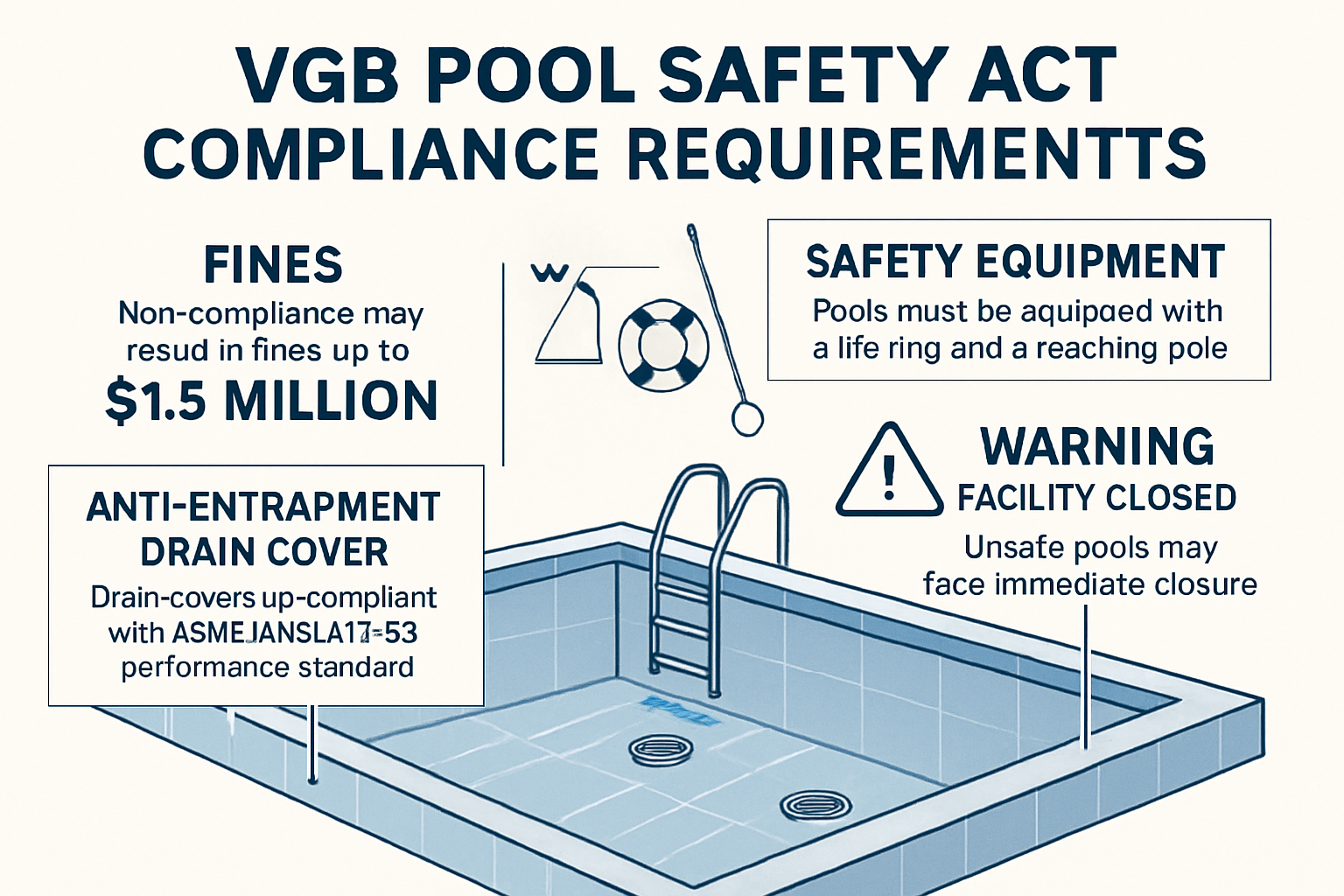
The Virginia Graeme Baker (VGB) Pool and Spa Safety Act remains the cornerstone of federal pool safety regulation. This law mandates anti-entrapment devices on all commercial pool and spa drains to prevent the powerful suction that can trap swimmers underwater [1]. Non-compliance carries severe penalties, including fines up to $1.5 million and potential indefinite facility closure.
All commercial pools must also meet Americans with Disabilities Act (ADA) accessibility requirements, including accessible lift options for individuals with mobility challenges. Failure to comply can result in lawsuits, business license denial, or forced facility modifications.
New 2025 State Regulations Affecting Pool Safety Standards
Texas Pool Safety Requirements
Effective September 1, 2025, Texas implemented groundbreaking pool safety legislation requiring property owners to install either a pool alarm OR safety cover for residential pools [2]. This represents a significant shift toward proactive safety measures, with contractors now required to verify compliance during installation and service calls.
The new Texas requirements specifically mandate:
- Pool alarms that detect unauthorized entry into pool areas
- Safety covers meeting ASTM safety standards
- Contractor verification of compliance documentation
- Property owner education about maintenance requirements
California's Enhanced Safety Measures
California has enacted multiple pool safety initiatives for 2025, most notably AB 2866, which establishes new safety requirements for child care providers in response to tragic child fatalities [3]. This legislation requires:
- Enhanced barrier requirements for childcare facilities
- Mandatory safety training for staff
- Regular safety equipment inspections
- Emergency response protocol documentation
Looking ahead, California's new heating regulations taking effect January 1, 2026, will prohibit gas as the primary heating source for pools and spas adding heaters for the first time, requiring heat pump, solar, or other approved alternatives [4].
Essential Pool Barrier and Fencing Compliance
Proper pool barriers represent the first line of defense against unauthorized access, particularly by children. National pool codes and CDC guidelines require all commercial pools to have perimeter fencing at least 4 feet high with self-closing, self-latching gates [5].
Barrier Specifications
✅ Minimum height: 4 feet (48 inches)
✅ Gate requirements: Self-closing and self-latching mechanisms
✅ Latch height: Minimum 54 inches from ground
✅ Fence spacing: No gaps larger than 4 inches
✅ Climbing prevention: No horizontal rails or footholds
ADA Accessibility Integration
Pool barriers must accommodate ADA accessibility requirements without compromising safety. This includes:
- Accessible gate widths (minimum 32 inches clear)
- Appropriate opening force for gate latches
- Accessible routes to pool entry points
- Compliant pool lift installations
"The most effective pool safety systems layer multiple protective measures. Barriers, alarms, covers, and proper supervision work together to create comprehensive protection." – Pool Safety Expert
Water Quality and Chemical Safety Standards
Maintaining proper water chemistry isn't just about swimmer comfort—it's a critical safety requirement with specific regulatory standards. Louisiana public pool regulations provide a clear example of strict water quality mandates that many states are adopting [6].
Required Water Chemistry Parameters
| Parameter | Acceptable Range | Testing Frequency |
|---|---|---|
| pH Level | 7.2 – 7.8 | Every 1-2 hours |
| Free Chlorine (without cyanuric acid) | Minimum 1.0 ppm | Every 1-2 hours |
| Free Chlorine (with cyanuric acid) | Minimum 2.0 ppm | Every 1-2 hours |
| Total Alkalinity | 80-120 ppm | Daily |
| Cyanuric Acid | 30-50 ppm | Weekly |
High-Risk Venue Requirements
High-risk aquatic venues, including wading pools and spray pads, face additional requirements. Louisiana mandates ANSI/NSF 50-listed secondary disinfection systems designed for 3-log (99.9%) Crypto inactivation per pass [7]. These systems provide crucial protection against chlorine-resistant pathogens.
Equipment Compliance and Safety Technology
The pool equipment landscape is rapidly evolving with new efficiency standards and safety requirements taking effect throughout 2025 and beyond.
DOE Motor Efficiency Regulations
New Department of Energy motor efficiency regulations implement a tiered standard affecting pump manufacturers and installers nationwide [8]:
- First tier: Effective September 2025
- Second tier: Implementation in 2027
- Compliance responsibility: Manufacturers, distributors, and installers
Flexible Demand Appliance Standards (FDAS)
All pool controls manufactured after September 29, 2025, must meet new California Title 20 requirements under FDAS [9]. This affects:
- Pool automation systems
- Variable speed pump controls
- Heating and filtration controls
- Energy management systems
Professional Compliance Verification and Maintenance
The trend toward contractor responsibility for compliance verification represents a significant shift in the pool industry. Service professionals must now:
Document Compliance Status
- Maintain records of safety equipment inspections
- Verify proper installation of required devices
- Provide compliance certification to property owners
- Report violations to appropriate authorities
Ongoing Monitoring Requirements
- Regular testing of safety equipment functionality
- Water chemistry documentation and reporting
- Emergency equipment inspection and maintenance
- Staff training and certification updates
Emergency Preparedness and Response Protocols
Comprehensive emergency preparedness goes beyond basic safety equipment to include detailed response protocols and staff training requirements.
Required Emergency Equipment
🚨 Life rings with throwing ropes
🚨 First aid stations with current supplies
🚨 Emergency communication devices
🚨 Rescue equipment appropriate for facility size
🚨 AED units for commercial facilities
Signage and Communication Requirements
All public and commercial pools must maintain visible posted signage clearly communicating safety rules and hazard warnings in compliance with U.S. Consumer Product Safety Commission and state health department codes [10]. Effective signage includes:
- Pool rules in multiple languages when appropriate
- Emergency contact information
- Depth markings clearly visible
- No diving warnings in shallow areas
- Chemical hazard notifications
Cost Considerations for Pool Safety Compliance
Understanding the financial investment required for proper pool safety compliance helps property owners budget appropriately and avoid costly violations.
Initial Compliance Costs
Barrier Installation: $3,000 – $15,000 depending on pool size and complexity
VGB-Compliant Drain Covers: $500 – $2,000 per drain
Pool Alarms: $200 – $1,500 for residential systems
Safety Covers: $1,500 – $8,000 depending on pool size
ADA Lift Systems: $3,000 – $12,000 for commercial installations
Ongoing Compliance Expenses
- Monthly water testing and chemical adjustments
- Annual safety equipment inspections
- Staff training and certification programs
- Emergency equipment replacement and updates
- Professional compliance audits
DIY Safety Measures vs. Professional Compliance Services
While some basic safety measures can be implemented by property owners, professional compliance verification is increasingly required by law and insurance providers.
Appropriate DIY Safety Tasks
- Daily visual safety inspections
- Basic water chemistry testing
- Emergency equipment checks
- Pool area cleaning and maintenance
Professional Requirements
- VGB compliance verification and installation
- ADA accessibility assessments
- Comprehensive safety audits
- Regulatory compliance documentation
- Emergency response training
Common Pool Safety Violations and How to Avoid Them
Understanding frequent compliance failures helps property owners proactively address potential issues before they become costly violations.
Top Compliance Failures
- Inadequate drain covers or missing VGB-compliant devices
- Faulty barrier systems with non-functioning gates
- Improper water chemistry maintenance and documentation
- Missing or outdated safety signage
- Insufficient emergency equipment or poor maintenance
Prevention Strategies
✅ Schedule regular professional inspections
✅ Maintain detailed compliance documentation
✅ Invest in quality safety equipment
✅ Train staff on current regulations
✅ Stay updated on changing requirements
When to Seek Professional Pool Safety Consultation
Given the complexity of current pool safety and compliance requirements, professional consultation is recommended in several scenarios:
Immediate Professional Consultation Needed
- New pool construction or major renovations
- Commercial facility operations
- Recent regulatory changes affecting your area
- Insurance compliance requirements
- Violation notices or safety incidents
Regular Professional Services
- Annual comprehensive safety audits
- Quarterly equipment inspections
- Monthly water chemistry verification
- Staff training and certification programs
Conclusion
Pool safety and compliance in 2025 requires a comprehensive understanding of evolving federal, state, and local regulations. From the VGB Act's anti-entrapment requirements to new state-specific mandates in Texas and California, the regulatory landscape continues to expand with higher stakes for non-compliance.
Property owners and pool operators must prioritize proper barrier installation, water chemistry management, emergency preparedness, and regular professional compliance verification. The investment in comprehensive safety measures not only protects against potentially devastating fines and facility closure but, more importantly, safeguards the lives of pool users.
As regulations continue to evolve, partnering with qualified pool safety professionals ensures ongoing compliance and peace of mind. Don't wait for an incident or violation notice—take proactive steps today to verify your pool's safety compliance and protect what matters most.
Ready to ensure your pool meets all current safety standards? Contact a certified pool safety professional in Riverside, CA, for a comprehensive compliance assessment and peace of mind that your facility prioritizes swimmer safety above all else.
References
[1] U.S. Consumer Product Safety Commission. Virginia Graeme Baker Pool and Spa Safety Act. 2025.
[2] Texas Legislature. Pool Safety Requirements Act. Effective September 1, 2025.
[3] California Legislature. Assembly Bill 2866 – Child Care Pool Safety. Effective January 1, 2025.
[4] California Energy Commission. Pool and Spa Heating Regulations. Effective January 1, 2026.
[5] Centers for Disease Control and Prevention. Pool Barrier Guidelines. 2025.
[6] Louisiana Department of Health. Public Pool Regulations. 2025.
[7] Louisiana Department of Health. High-Risk Aquatic Venue Requirements. 2025.
[8] U.S. Department of Energy. Motor Efficiency Standards for Pool Equipment. 2025.
[9] California Energy Commission. Title 20 Appliance Efficiency Regulations. 2025.
[10] U.S. Consumer Product Safety Commission. Pool Safety Signage Requirements. 2025.
SEO Meta Title: Pool Safety & Compliance Standards 2025 | Riverside CA Guide
Meta Description: Complete guide to 2025 pool safety compliance requirements, VGB Act standards, new state regulations, and best practices for Riverside, CA pool owners and operators.