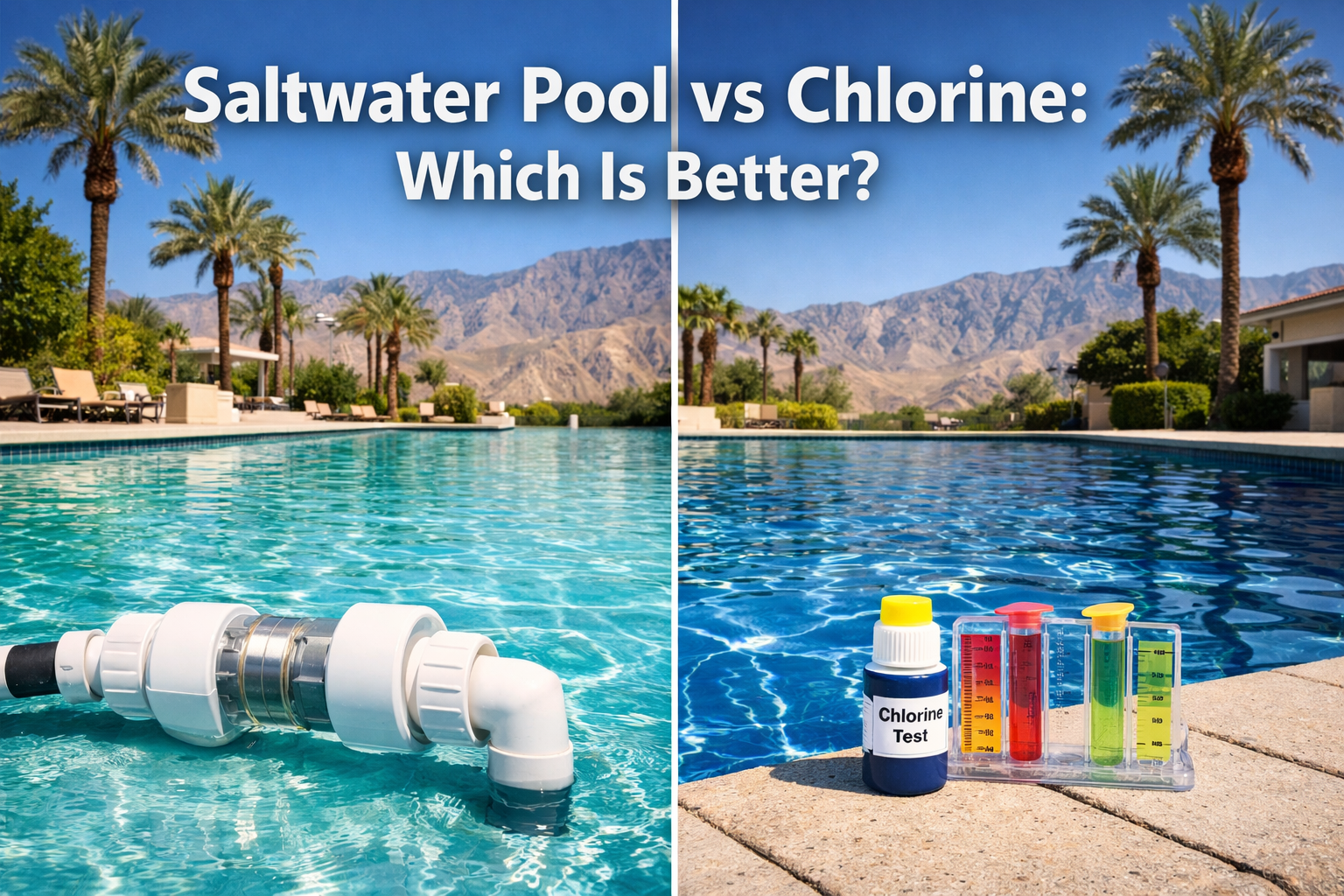
Picture this: it’s another scorching summer day in Riverside, California, and you’re dreaming of diving into your own backyard oasis. But before you can enjoy those refreshing laps, you face a crucial decision that will impact your swimming experience for years to come. The saltwater pool vs chlorine debate isn’t just about personal preference—it’s about finding the perfect match for Riverside’s unique climate, water conditions, and your family’s needs.
With over 280 sunny days per year in the 92503 area, your pool will likely see heavy use, making this choice even more critical. I’ve spent years helping Riverside homeowners navigate this decision, and I’m here to break down everything you need to know about both systems.
Key Takeaways
• Saltwater pools use a salt-chlorine generator to automatically convert salt into chlorine, providing gentler, more consistent sanitation
• Traditional chlorine pools require manual chemical addition but offer lower upfront costs and simpler equipment maintenance
• Riverside’s hard water (200-250 ppm) creates scaling challenges for both systems, but saltwater pools face additional corrosion risks
• Comfort-wise, saltwater pools typically provide softer water with less eye and skin irritation—ideal for frequent swimmers
• Cost analysis shows saltwater pools cost $1,000-$2,500 more initially but may save on ongoing chemical expenses
How Each Pool System Actually Works 🔧
Saltwater Pool Systems: The Science Behind the Salt
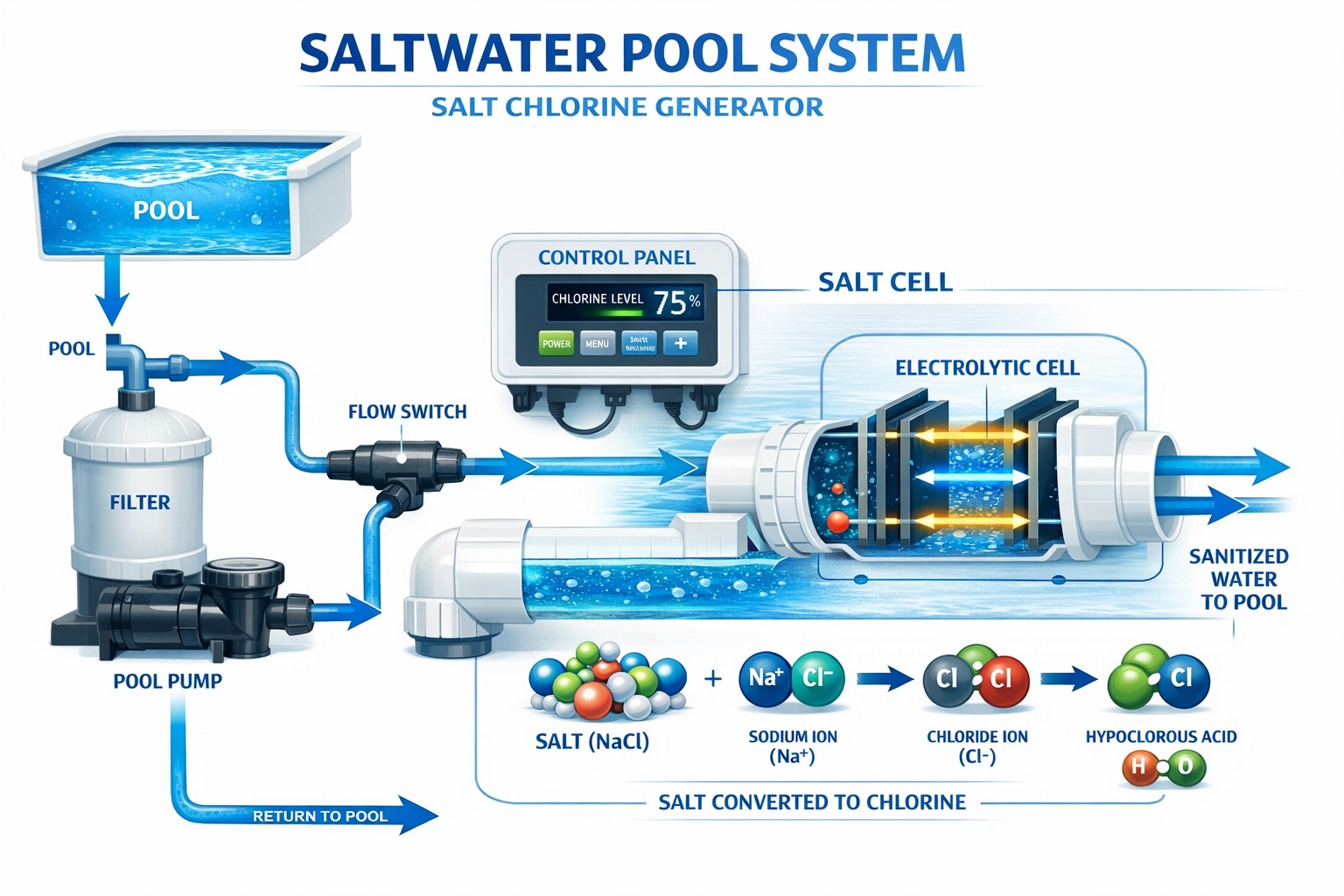
Don’t let the name fool you—saltwater pools still use chlorine for sanitation. The key difference lies in how that chlorine is produced. A saltwater system uses a salt-chlorine generator (also called a salt cell) that converts dissolved salt into chlorine through a process called electrolysis.
Here’s what happens in your saltwater pool:
- Salt is dissolved in the water at about 3,000-4,000 parts per million
- Water flows through the salt cell where electrical current breaks down salt molecules
- This process creates hypochlorous acid—the same sanitizing agent found in traditional chlorine
- The chlorine level remains steady and consistent, typically 1-3 ppm
The result? You’re still swimming in chlorinated water, but at lower, more stable levels that feel gentler on your skin and eyes.
Traditional Chlorine Pools: Manual Control and Flexibility
Traditional chlorine pools rely on manual chemical addition through tablets, liquid, or granular chlorine. This system gives you direct control over sanitization levels but requires more hands-on management.
The traditional chlorine process involves:
- Adding chlorine products directly to the water
- Regular testing and adjustment of chemical levels
- Balancing pH, alkalinity, and sanitizer levels manually
- Shock treatments when needed for heavy use or contamination
While this requires more effort, it also means immediate response capability when water conditions change rapidly.
Saltwater Pool vs Chlorine: Performance in Riverside’s Climate 🌞
Why Riverside’s Environment Matters
Living in the 92503 area means dealing with specific environmental factors that significantly impact pool performance:
Hot, Dry Summers: With temperatures regularly exceeding 90°F, your pool will see heavy use during the extended swimming season from April through October.
Hard Water: Riverside’s municipal water contains 200-250 ppm of dissolved minerals (about 11 grains per gallon), which creates scaling on pool surfaces and equipment.
Low Humidity: The dry desert climate increases evaporation rates, concentrating chemicals and minerals in your pool water.
How Saltwater Systems Handle Riverside Conditions
Saltwater pools offer several advantages in our local climate:
✅ Consistent chlorination despite heavy use and high temperatures
✅ Reduced chemical odors that can be amplified in hot weather
✅ Softer water feel that’s more comfortable during frequent swimming
✅ Less frequent shocking needed compared to manual chlorination
However, Riverside’s hard water creates unique challenges:
⚠️ Increased scaling on the salt cell, requiring more frequent cleaning
⚠️ Corrosion risks to metal fixtures and natural stone if water isn’t properly balanced
⚠️ Higher calcium levels can interfere with salt cell efficiency
Traditional Chlorine Performance in Local Conditions
Chlorine pools also have specific advantages in Riverside:
✅ Quick adjustment capability when high temperatures affect water chemistry
✅ Lower corrosion risk to pool equipment and decorative elements
✅ Simpler troubleshooting when water quality issues arise
✅ Better compatibility with existing pool heating systems
The challenges include:
⚠️ More frequent chemical additions needed during hot weather
⚠️ Higher chlorine consumption due to UV degradation
⚠️ Potential for over-chlorination if not monitored carefully
Cost Analysis: Saltwater Pool vs Chlorine Investment 💰
Upfront Installation Costs
| System Component | Saltwater Pool | Traditional Chlorine |
|---|---|---|
| Salt Generator | $1,000-$2,500 | Not required |
| Installation Labor | $300-$500 | $100-$200 |
| Initial Salt | $50-$100 | Not required |
| Specialized Plumbing | $200-$400 | Standard plumbing |
| Total Additional Cost | $1,550-$3,500 | $0 |
Annual Operating Costs in Riverside
Saltwater Pool Annual Expenses:
- Electricity for generator: $150-$300
- Salt replacement: $50-$100
- Cell replacement (every 3-5 years): $200-$400 annually
- Other chemicals: $100-$200
- Total: $500-$1,000 per year
Traditional Chlorine Pool Annual Expenses:
- Chlorine products: $300-$600
- pH adjusters and balancers: $150-$250
- Shock treatments: $100-$150
- Testing supplies: $50-$100
- Total: $600-$1,100 per year
Local Insight: “In Riverside’s climate, I’ve found that saltwater pools typically break even on operating costs within 3-4 years, mainly due to reduced chemical purchases during our long swimming season.” – Pool maintenance professional with 15 years in the 92503 area
Maintenance Requirements: Daily, Weekly, and Seasonal 🛠️
Saltwater Pool Maintenance Schedule
Daily Tasks:
- Visual inspection of water clarity
- Check salt generator display for error codes
- Skim surface debris (more important in windy Riverside conditions)
Weekly Tasks:
- Test chlorine levels (should be 1-3 ppm)
- Check pH and alkalinity
- Clean skimmer baskets
- Inspect salt cell for scaling
Monthly Tasks:
- Test salt levels (3,000-4,000 ppm)
- Clean salt cell if needed
- Check calcium hardness (critical in Riverside)
- Inspect for corrosion on metal fixtures
Seasonal Tasks:
- Professional salt cell inspection
- Replace cell every 3-5 years
- Deep clean and re-calibrate generator
- Apply protective coatings to prevent corrosion
Traditional Chlorine Pool Maintenance
Daily Tasks:
- Add chlorine tablets to dispenser
- Test chlorine levels (especially during hot weather)
- Skim and clean as needed
Weekly Tasks:
- Comprehensive water testing
- Adjust pH and alkalinity
- Add shock treatment if needed
- Clean pool surfaces
Monthly Tasks:
- Deep clean filters
- Test and adjust total alkalinity
- Inspect equipment for wear
- Balance all chemical levels
Seasonal Tasks:
- Replace filter cartridges
- Service pump and filter system
- Professional equipment inspection
- Winterization (minimal in Riverside)
Health and Comfort: The Swimming Experience 🏊♀️
Skin and Eye Comfort Comparison
Saltwater Pool Benefits:
- Gentler on skin: Lower chlorine levels reduce drying and irritation
- Less eye irritation: Consistent, moderate chlorine levels prevent burning
- Softer water feel: Many describe it as “silky” or “smooth”
- Reduced chemical odors: Less “pool smell” that can be overwhelming
Traditional Chlorine Considerations:
- Variable comfort levels: Depends heavily on maintenance consistency
- Potential for over-chlorination: Can cause skin dryness and eye irritation
- Strong chemical odors: Especially noticeable in enclosed areas
- Bleaching effects: May fade swimwear faster than saltwater
Impact on Hair and Swimwear
| Factor | Saltwater Pool | Chlorine Pool |
|---|---|---|
| Hair Damage | Minimal with proper pH | Can cause dryness/color fade |
| Swimwear Longevity | Generally longer lasting | May degrade elastic faster |
| Jewelry Safety | Risk to silver/copper items | Generally safer for metals |
| Skin Moisture | Maintains natural oils better | Can strip natural oils |
Special Considerations for Sensitive Individuals
If you or family members have:
- Eczema or sensitive skin: Saltwater pools typically provide relief
- Asthma or respiratory issues: Lower chloramine levels in saltwater systems
- Contact lens wear: Many find saltwater more comfortable
- Frequent swimming routine: Gentler daily exposure with saltwater
Equipment Longevity and Replacement Costs 🔧
Saltwater System Equipment Lifespan
Salt Chlorine Generator:
- Lifespan: 3-7 years depending on usage and maintenance
- Replacement cost: $800-$1,500
- Riverside factors: Hard water may reduce lifespan to 3-5 years
Salt Cell:
- Lifespan: 10,000-15,000 hours of operation
- Replacement cost: $200-$600
- Local consideration: Requires more frequent cleaning due to calcium buildup
Other Equipment Impacts:
- Pool heaters may corrode faster (especially copper heat exchangers)
- Metal railings and fixtures need protection or frequent replacement
- Natural stone coping may show salt damage over time
Traditional Chlorine System Durability
Standard Equipment:
- Pool pump: 8-12 years typical lifespan
- Filter system: 1-2 years for cartridges, 5-7 years for DE grids
- Heater: 10-15 years with proper maintenance
- Chemical feeders: 3-5 years average
Riverside-Specific Considerations:
- Hard water affects all systems equally
- No additional corrosion from salt
- Simpler repairs and more available technicians
- Lower risk of expensive electronic component failure
Environmental Impact and Sustainability 🌱
Water Usage and Conservation
Saltwater Pools:
- Require less frequent draining due to stable chemistry
- Salt doesn’t evaporate, only water does
- May need partial draining more often in hard water areas
- Generally use 10-15% less water annually
Traditional Chlorine Pools:
- May require more frequent partial water changes
- Chemical buildup necessitates dilution
- Shock treatments can temporarily make water unusable
- Higher water turnover in hot climates
Chemical Environmental Impact
Saltwater Systems:
- Produce chlorine on-site, reducing transportation emissions
- No plastic chlorine containers to dispose of
- Salt is a natural mineral
- However: Backwash water high in salt can harm landscaping
Traditional Chlorine:
- Requires ongoing chemical production and transportation
- Plastic packaging waste from chemical containers
- Risk of chemical spills during transport and storage
- More controlled disposal of waste water
Energy Consumption Analysis
| Energy Factor | Saltwater Pool | Traditional Chlorine |
|---|---|---|
| Generator Operation | 150-300 kWh annually | Not applicable |
| Additional Pump Time | May need longer filtration | Standard operation |
| Heating Efficiency | Potential reduction due to corrosion | Standard efficiency |
| Overall Impact | 10-20% higher energy use | Baseline consumption |
Making the Right Choice for Your Riverside Home 🏡
Choose Saltwater If You:
✅ Prioritize comfort: Have sensitive skin, allergies, or swim frequently
✅ Want automation: Prefer consistent, hands-off sanitization
✅ Plan long-term: Will stay in your home 5+ years to recoup investment
✅ Can protect against corrosion: Willing to seal natural stone, use sacrificial anodes, or choose salt-resistant materials
✅ Value water quality: Want the softer, more pleasant swimming experience
Choose Traditional Chlorine If You:
✅ Have budget constraints: Need to minimize upfront installation costs
✅ Prefer simplicity: Want straightforward, easily serviceable equipment
✅ Have existing metal features: Concerned about corrosion to railings, lighting, or decorative elements
✅ Want quick adjustments: Need ability to rapidly change sanitization levels
✅ Plan to move soon: Won’t be in the home long enough to see cost benefits
Riverside-Specific Recommendations
Given our local conditions in the 92503 area, here’s my professional guidance:
Best for Most Riverside Families: Saltwater systems typically provide the best long-term value and comfort, especially with our extended swimming season and hard water challenges.
Essential for Saltwater Success in Riverside:
- Install a calcium scale prevention system
- Use sacrificial anodes to protect metal equipment
- Choose salt-resistant materials for coping and fixtures
- Plan for more frequent salt cell cleaning (every 2-3 months)
When Traditional Chlorine Makes Sense:
- Existing pools with extensive metal features
- Homes with natural stone that can’t be sealed
- Budgets under $15,000 for total pool installation
- Pools used less than 4 months per year
Professional Installation and Local Considerations 🔨
Finding Qualified Installers in Riverside
When choosing between saltwater pool vs chlorine systems, proper installation is crucial for long-term success. Look for contractors who:
- Have specific experience with salt systems in hard water areas
- Understand local building codes and permit requirements
- Can recommend corrosion-resistant materials for Riverside conditions
- Offer comprehensive warranties on both equipment and installation
Permit and HOA Considerations
City of Riverside Requirements:
- Pool permits required for all new installations
- Electrical permits needed for salt generator installation
- Safety barrier compliance mandatory
- Water discharge regulations for backwashing
HOA Considerations:
- Some communities have restrictions on salt pool discharge
- Architectural approval may be needed for equipment placement
- Noise ordinances may affect generator placement
- Landscaping requirements around pool equipment
Troubleshooting Common Issues 🛠️
Saltwater Pool Problems in Riverside
Scale Buildup on Salt Cell:
- Cause: High calcium levels in local water
- Solution: Monthly acid washing, calcium sequestrants
- Prevention: Regular water testing, partial water changes
Corrosion of Metal Fixtures:
- Cause: Galvanic corrosion from salt water
- Solution: Sacrificial anodes, protective coatings
- Prevention: Choose salt-resistant materials initially
Low Chlorine Production:
- Cause: Scaled cell, low salt levels, cold water
- Solution: Clean cell, test salt levels, adjust generator output
- Prevention: Regular maintenance schedule
Traditional Chlorine Pool Challenges
Rapid Chlorine Loss:
- Cause: High temperatures, UV exposure, heavy use
- Solution: Increase chlorine addition, use stabilizer
- Prevention: Consistent monitoring, shade structures
pH Drift:
- Cause: Hard water, chemical interactions
- Solution: Regular pH adjustment, buffer systems
- Prevention: Automated chemical feeders
Algae Growth:
- Cause: Low chlorine, poor circulation, hot weather
- Solution: Shock treatment, brush surfaces, improve filtration
- Prevention: Consistent sanitization levels
Future Trends and Technology 🚀
Emerging Pool Technologies
Smart Pool Systems: Both saltwater and traditional chlorine pools are incorporating:
- Automated testing and dosing
- Smartphone monitoring and control
- Energy-efficient variable speed pumps
- Advanced filtration systems
Hybrid Systems: New technologies combining:
- Salt generation with UV sanitization
- Ozone treatment with traditional chlorination
- Mineral systems with reduced chemical needs
Saltwater Pool vs Chlorine: Looking Ahead
The pool industry continues evolving, with saltwater systems becoming more sophisticated and traditional chlorine systems becoming more automated. For Riverside homeowners, this means:
- Better corrosion resistance in new salt generator designs
- Improved efficiency reducing energy consumption
- Enhanced automation making both systems easier to maintain
- Smart integration with home automation systems
Conclusion: Your Perfect Pool Awaits
After analyzing every aspect of the saltwater pool vs chlorine decision for Riverside 92503 homes, the choice ultimately comes down to your priorities, budget, and lifestyle. Both systems can provide years of swimming enjoyment when properly installed and maintained.
For most Riverside families, I recommend saltwater systems because:
- The comfort benefits shine during our long, hot swimming season
- Automation reduces maintenance burden during heavy use periods
- Long-term cost savings offset the higher initial investment
- The gentler swimming experience enhances daily enjoyment
However, traditional chlorine remains the smart choice when upfront costs are a primary concern or when existing pool features would be at risk from salt corrosion.
Your Next Steps
- Assess your current situation: Budget, existing pool features, family needs
- Get multiple quotes: Compare both system types from qualified local contractors
- Consider long-term costs: Factor in 5-10 years of operating expenses
- Test the waters: Visit friends or neighbors with both system types
- Plan for success: Choose appropriate materials and maintenance schedules
Remember, the best pool system is the one you’ll actually enjoy using. Whether you choose saltwater or traditional chlorine, proper installation, regular maintenance, and quality equipment will ensure years of refreshing relief from Riverside’s desert heat.
The decision between a saltwater pool vs. a chlorine pool doesn’t have to be overwhelming. With the right information and professional guidance, you’ll soon be enjoying your own backyard oasis, perfectly suited to your family’s needs and Riverside’s unique environment.