Seasonal Pool Care: Your Complete Guide to Year-Round Pool Maintenance in Riverside, CA
Picture this: It's a scorching July afternoon in Riverside, and your neighbor's pool looks like a green swamp while yours sparkles like a crystal-clear oasis. The difference? Seasonal pool care that adapts to Riverside's unique climate throughout the year. Proper seasonal pool care isn't just about keeping your water clean – it's about protecting your investment, ensuring safety, and maximizing your pool's lifespan in our desert climate with its extreme temperature swings and seasonal challenges.
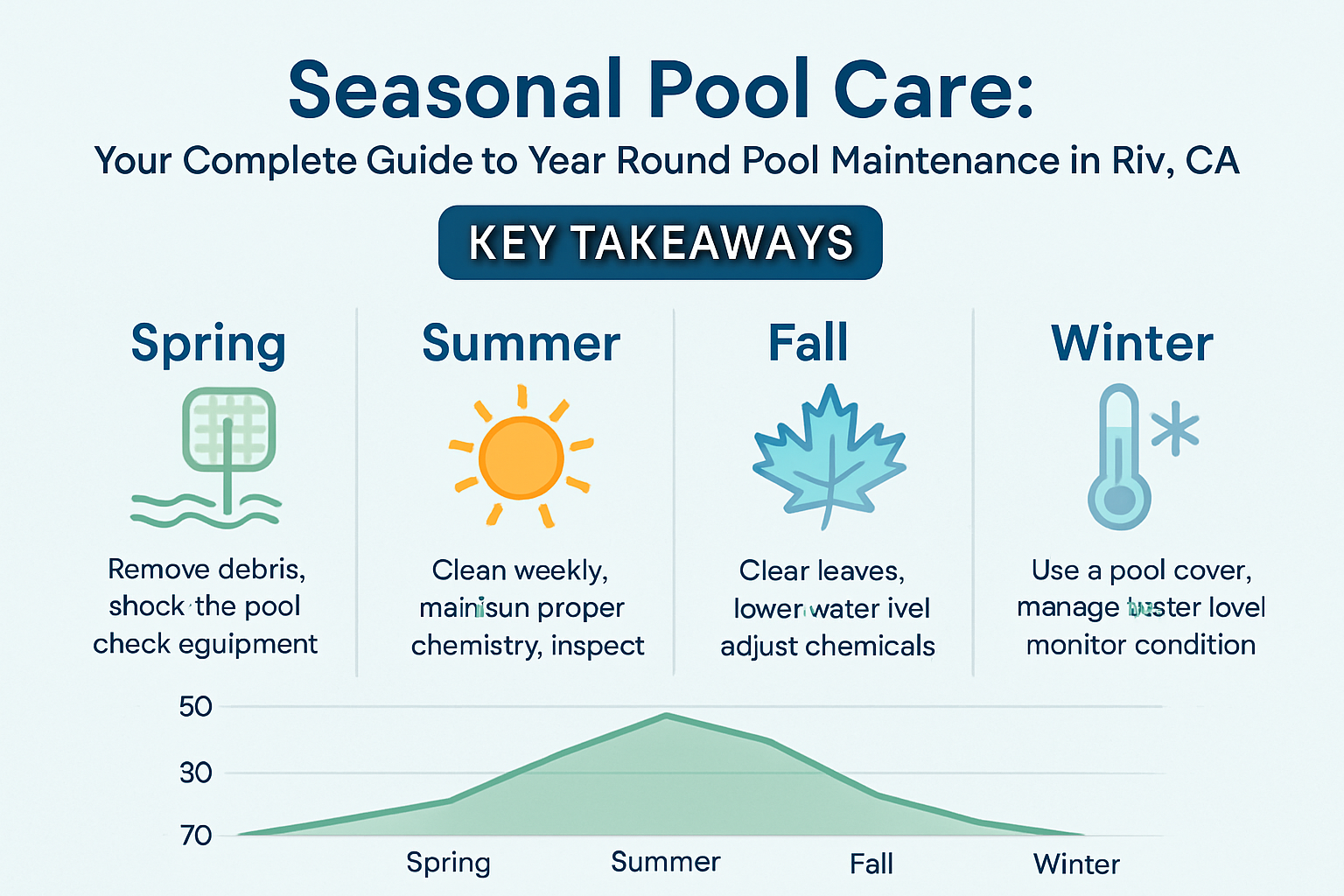
Key Takeaways
• Seasonal pool care in Riverside requires year-round attention due to our desert climate with hot summers and mild winters
• Each season brings unique challenges – from intense UV exposure in summer to wind-blown debris in fall and winter
• Professional seasonal maintenance saves money long-term by preventing costly repairs and equipment failures
• Water chemistry changes dramatically with temperature fluctuations and seasonal usage patterns
• Equipment needs seasonal adjustments for optimal performance and energy efficiency
Understanding Seasonal Pool Care in Riverside's Climate
Riverside's semi-arid climate creates unique challenges for pool owners that differ significantly from coastal or humid regions. Our area experiences temperature swings from the 40s in winter to over 110°F in summer, combined with low humidity, intense UV radiation, and seasonal Santa Ana winds that can turn pool maintenance into a year-round balancing act.
Seasonal pool care means adjusting your maintenance routine, chemical treatments, equipment settings, and cleaning schedule to match the specific demands each season places on your pool. Unlike regions with more stable climates, Riverside pools face dramatic shifts in evaporation rates, chemical consumption, and equipment stress throughout the year.
The key to successful seasonal pool care lies in anticipating these changes rather than reacting to problems after they occur. This proactive approach keeps your pool swim-ready year-round while protecting your equipment investment and maintaining water quality that meets health standards.
Spring Pool Care: Awakening Your Pool from Winter
Opening Your Pool for the Season
Spring in Riverside typically begins in March, making it the perfect time to transition from winter maintenance to active swimming season. The mild temperatures and increased daylight hours signal the start of more intensive pool care routines.
Essential Spring Tasks:
• Remove and clean winter covers thoroughly before storage
• Inspect all equipment for winter damage or wear
• Test and balance water chemistry after months of reduced maintenance
• Clean and restart filtration systems with fresh filter media
• Shock treat the water to eliminate any bacterial growth
• Check safety equipment including alarms, fences, and covers
Dealing with Spring Algae Blooms
Riverside's spring weather creates perfect conditions for algae growth as temperatures rise and sunlight increases. The combination of warming water and accumulated organic matter from winter often results in green, cloudy water that requires immediate attention.
Spring Algae Treatment Protocol:
- Brush all surfaces vigorously to break up algae colonies
- Vacuum debris and organic matter from pool bottom
- Shock with chlorine at 2-3 times normal levels
- Run filtration continuously for 24-48 hours
- Test and adjust pH levels to optimize chlorine effectiveness
"Spring is when most pool problems develop if you don't stay ahead of the warming temperatures and changing water chemistry." – Certified Pool Operator
Summer Pool Care: Managing Peak Usage and Heat
Intensive Maintenance During Riverside's Extreme Heat
Summer pool care in Riverside requires daily attention due to our intense heat, high UV exposure, and peak swimming season usage. Temperatures regularly exceeding 100°F accelerate chemical consumption and increase evaporation rates significantly.
Daily Summer Maintenance:
• Check chlorine levels every morning
• Empty skimmer baskets and clean waterline
• Test pH levels which rise quickly in heat
• Monitor water level due to high evaporation
• Inspect equipment for heat-related stress
Managing Chemical Consumption
Riverside's summer heat doubles or triples normal chemical consumption. The intense UV radiation breaks down chlorine rapidly, while high temperatures accelerate chemical reactions and increase bather load during peak swimming times.
Summer Chemical Management:
• Increase chlorine production or add stabilized chlorine
• Use cyanuric acid to protect chlorine from UV degradation
• Monitor total dissolved solids which concentrate due to evaporation
• Adjust alkalinity more frequently as pH fluctuates
• Consider liquid chemicals which don't add unnecessary minerals
Equipment Stress and Energy Efficiency
Pool equipment works overtime during summer months in Riverside's extreme heat. Pumps, heaters, and automation systems face increased stress, while energy costs can skyrocket without proper management.
Summer Equipment Optimization:
• Run pumps during off-peak hours to reduce electricity costs
• Clean filters weekly instead of monthly
• Shade equipment when possible to reduce heat stress
• Monitor pump performance for signs of overheating
• Service automation systems to ensure efficient operation
Fall Pool Care: Preparing for Seasonal Transitions
Managing Falling Debris
Fall in Riverside brings Santa Ana winds and debris from surrounding vegetation. Palm fronds, leaves, and dust storms can quickly overwhelm pool filtration systems and create water quality issues.
Fall Debris Management:
• Install leaf nets or covers during wind events
• Increase skimming frequency to twice daily
• Clean filters weekly during heavy debris periods
• Trim overhanging vegetation before fall winds
• Check and clean automatic cleaners more frequently
Adjusting Chemical Levels for Cooler Weather
As temperatures cool in fall, chemical consumption decreases but water chemistry still requires attention. Reduced evaporation means chemicals concentrate differently, while decreased UV exposure changes chlorine demand patterns.
Fall Chemical Adjustments:
• Reduce chlorine production as temperatures drop
• Monitor calcium hardness as evaporation slows
• Adjust pH more gradually with reduced temperature fluctuations
• Test total alkalinity monthly instead of weekly
• Prepare for winter chemical storage in cool, dry areas
Winter Pool Care: Maintaining Your Investment Year-Round
Riverside's Mild Winter Advantage
Unlike colder climates, Riverside's mild winters allow for year-round pool operation with reduced maintenance. Average winter temperatures in the 60s mean pools rarely require complete winterization, but they do need seasonal adjustments.
Winter Maintenance Benefits:
• Continued filtration prevents stagnation and algae growth
• Reduced chemical costs due to lower temperatures and UV exposure
• Equipment longevity through regular operation vs. shutdown
• Faster spring startup without extensive reopening procedures
Reduced Maintenance Schedule
Winter pool care in Riverside focuses on maintaining water quality with significantly reduced chemical and cleaning demands. The cooler temperatures and reduced usage allow for extended maintenance intervals.
Winter Maintenance Schedule:
• Test water chemistry weekly instead of daily
• Clean filters monthly or as needed
• Check equipment operation weekly
• Remove debris after wind events
• Monitor water level monthly
Common Seasonal Pool Problems in Riverside
Summer Challenges
Heat-Related Issues:
• Rapid chlorine loss requiring daily additions
• Equipment overheating and premature failure
• High evaporation leading to chemical concentration
• Increased algae growth in warm water
• pH drift due to temperature fluctuations
Fall and Winter Challenges
Weather-Related Problems:
• Wind-blown debris overwhelming filtration
• Dust storms clouding water and coating surfaces
• Temperature fluctuations affecting chemical balance
• Reduced circulation if equipment is improperly adjusted
• Neglect due to reduced pool usage
Professional vs. DIY Seasonal Pool Care
When to Call Professionals
Complex Seasonal Transitions require expertise that most homeowners lack. Professional pool services understand Riverside's climate challenges and can prevent costly problems through proper seasonal adjustments.
Professional Services Include:
• Equipment seasonal tune-ups and efficiency optimization
• Water chemistry analysis using professional-grade testing
• Seasonal chemical program design for local conditions
• Equipment troubleshooting before problems become expensive
• Emergency response during extreme weather events
DIY Maintenance Limitations
While basic maintenance can be handled by homeowners, seasonal transitions often reveal the limitations of DIY pool care. Complex chemical adjustments, equipment optimization, and problem diagnosis require professional knowledge.
DIY Challenges:
• Misunderstanding seasonal chemical needs leading to over or under-treatment
• Equipment damage from improper seasonal adjustments
• Water quality problems from inadequate testing and treatment
• Safety concerns from improper chemical handling and storage
• Time commitment that many homeowners underestimate
Cost Considerations for Seasonal Pool Care
Seasonal Budget Planning
Seasonal pool care costs vary dramatically throughout the year in Riverside. Summer months typically require 2-3 times the chemical budget of winter months, while equipment stress can lead to unexpected repair costs.
Seasonal Cost Factors:
• Chemical consumption peaks in summer heat
• Energy costs for increased pump operation
• Equipment wear from temperature extremes
• Professional service frequency adjustments
• Emergency repairs from neglected seasonal maintenance
Long-Term Investment Protection
Proper seasonal care protects your pool investment by extending equipment life, maintaining water quality, and preventing major repairs. The cost of professional seasonal maintenance is typically 10-20% of the cost of major equipment replacement or pool resurfacing.
Investment Protection Benefits:
• Extended equipment life through proper seasonal adjustments
• Maintained water chemistry preventing surface damage
• Early problem detection before expensive repairs are needed
• Energy efficiency optimization reducing operating costs
• Property value maintenance through proper pool care
Frequently Asked Questions
How often should I adjust my pool care routine seasonally?
In Riverside, you should adjust your pool care routine four times per year – transitioning in March (spring), June (summer), September (fall), and December (winter). Each transition requires specific changes to chemical dosing, equipment settings, and maintenance frequency.
Can I use the same chemicals year-round in Riverside?
While the same basic chemicals are used year-round, the quantities and application methods change dramatically with seasons. Summer requires 2-3 times more chlorine and pH adjusters, while winter allows for reduced chemical programs and extended intervals between treatments.
Should I heat my pool during Riverside winters?
Pool heating during winter depends on your usage patterns and budget. Riverside's mild winters make year-round swimming possible with heating, but energy costs can be significant. Many pool owners heat only for special occasions during winter months.
How do Santa Ana winds affect my seasonal pool care?
Santa Ana winds create unique challenges requiring immediate response. During wind events, increase skimming frequency, consider temporary covers, clean filters more often, and be prepared for rapid debris accumulation that can overwhelm normal maintenance routines.
When should I schedule professional seasonal maintenance?
Professional seasonal maintenance should be scheduled at each seasonal transition – typically March, June, September, and December in Riverside. This ensures equipment is properly adjusted, chemical programs are optimized, and potential problems are identified before they become expensive repairs.
How does Riverside's water quality affect seasonal pool care?
Riverside's hard water requires special attention to calcium levels and total dissolved solids, especially during summer when evaporation concentrates minerals. Regular professional water analysis helps maintain proper balance and prevents scaling or equipment damage.
What emergency supplies should I keep for seasonal weather events?
Emergency pool supplies for Riverside should include extra chlorine for heat waves, leaf nets for wind events, pH adjusters for rapid chemical changes, and backup filtration media. Having supplies on hand prevents water quality problems during extreme weather.
How far in advance should I plan seasonal pool care changes?
Seasonal planning should begin 2-4 weeks before each transition. This allows time to order chemicals, schedule equipment maintenance, and gradually adjust water chemistry rather than making sudden changes that can shock the pool system.
When to Call a Professional for Seasonal Pool Care
Emergency Situations
Immediate professional help is needed when seasonal transitions create water quality emergencies, equipment failures, or safety concerns. Don't attempt to handle complex problems that could worsen without proper expertise.
Emergency Indicators:
• Green or black water that doesn't clear with basic treatment
• Equipment failure during extreme weather
• Chemical imbalances that won't stabilize
• Safety equipment malfunctions affecting pool access
• Structural concerns from temperature or weather damage
Routine Professional Services
Regular professional maintenance during seasonal transitions ensures optimal pool performance and prevents problems before they develop. Professional services provide expertise, proper equipment, and comprehensive care that most homeowners cannot match.
Professional Service Benefits:
• Expertise in local conditions and seasonal challenges
• Professional-grade equipment and testing capabilities
• Comprehensive maintenance covering all pool systems
• Emergency response availability during weather events
• Long-term planning for equipment replacement and upgrades
Conclusion: Mastering Seasonal Pool Care in Riverside
Successful seasonal pool care in Riverside requires understanding our unique climate challenges and adapting maintenance routines throughout the year. From managing extreme summer heat and chemical consumption to handling fall debris and winter equipment adjustments, each season demands specific attention and expertise.
The investment in proper seasonal pool care pays dividends through extended equipment life, consistent water quality, and year-round swimming enjoyment. Whether you choose professional services or handle maintenance yourself, the key is consistency and adaptation to seasonal changes rather than reactive problem-solving.
Your next steps should include evaluating your current seasonal maintenance routine, identifying areas for improvement, and considering professional consultation for complex seasonal transitions. Remember that proper seasonal pool care is an investment in your property, your family's safety, and your long-term enjoyment of your pool.
For expert seasonal pool care tailored to Riverside's unique climate challenges, consider consulting with local pool professionals who understand our area's specific needs and can provide customized maintenance programs for year-round pool perfection.
References
[1] National Swimming Pool Foundation – Pool & Hot Tub Alliance Seasonal Maintenance Guidelines
[2] California Department of Public Health – Swimming Pool Water Quality Standards
[3] Riverside County Environmental Health – Pool Operation Requirements
[4] American Red Cross – Pool Safety and Maintenance Protocols
SEO Meta Information
Meta Title: Seasonal Pool Care Guide for Riverside CA | Year-Round Maintenance Tips
Meta Description: Expert seasonal pool care guide for Riverside, CA. Learn how to adjust pool maintenance by season for optimal water quality and equipment performance year-round.