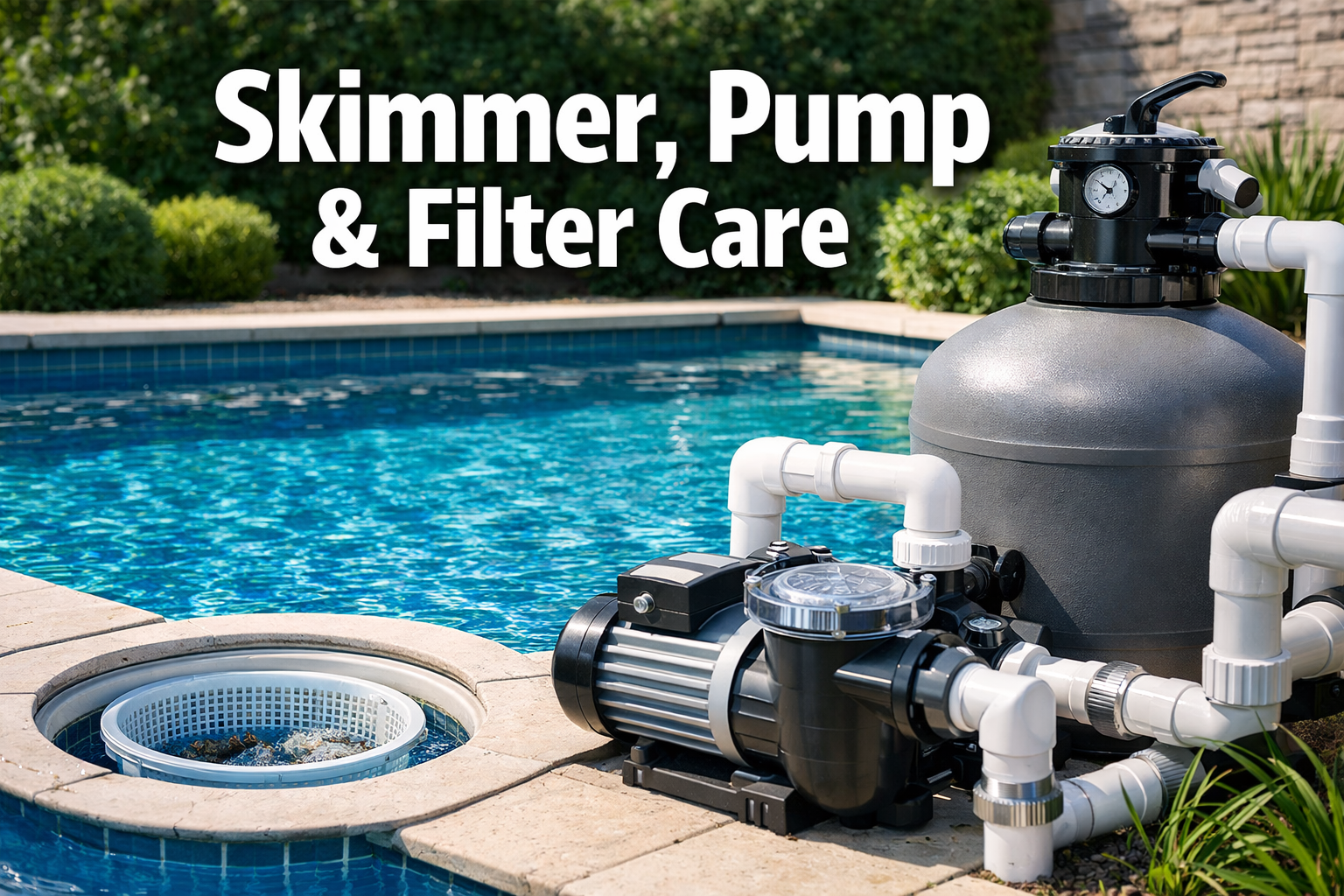
The Complete Guide to Skimmer, Pump & Filter Care for Corona Pool Owners
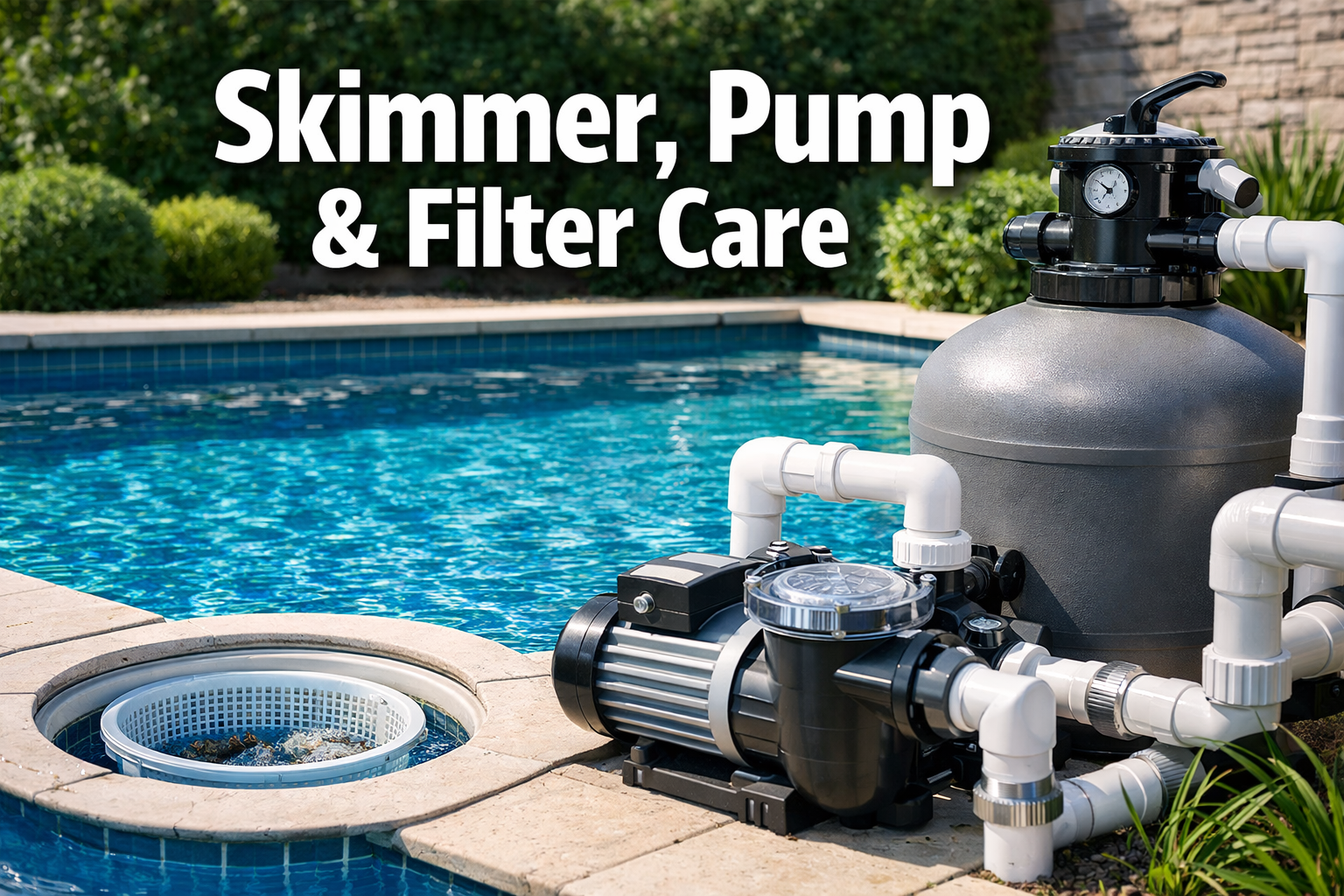
Picture this: you step outside on a beautiful Corona morning, ready to enjoy your backyard oasis, only to find your pool water cloudy and uninviting. The culprit? Neglected Skimmer, Pump & Filter Care. As someone who’s seen countless pool owners struggle with preventable water quality issues, I can tell you that proper maintenance of these three critical components is the difference between crystal-clear water and costly repairs.
Your pool’s circulation system works around the clock to keep your water clean, safe, and ready for those perfect California pool days. But without consistent Skimmer, Pump & Filter Care, even the most beautiful pool can quickly become a maintenance nightmare. The good news? With the right knowledge and routine, maintaining these essential components is straightforward and incredibly rewarding.
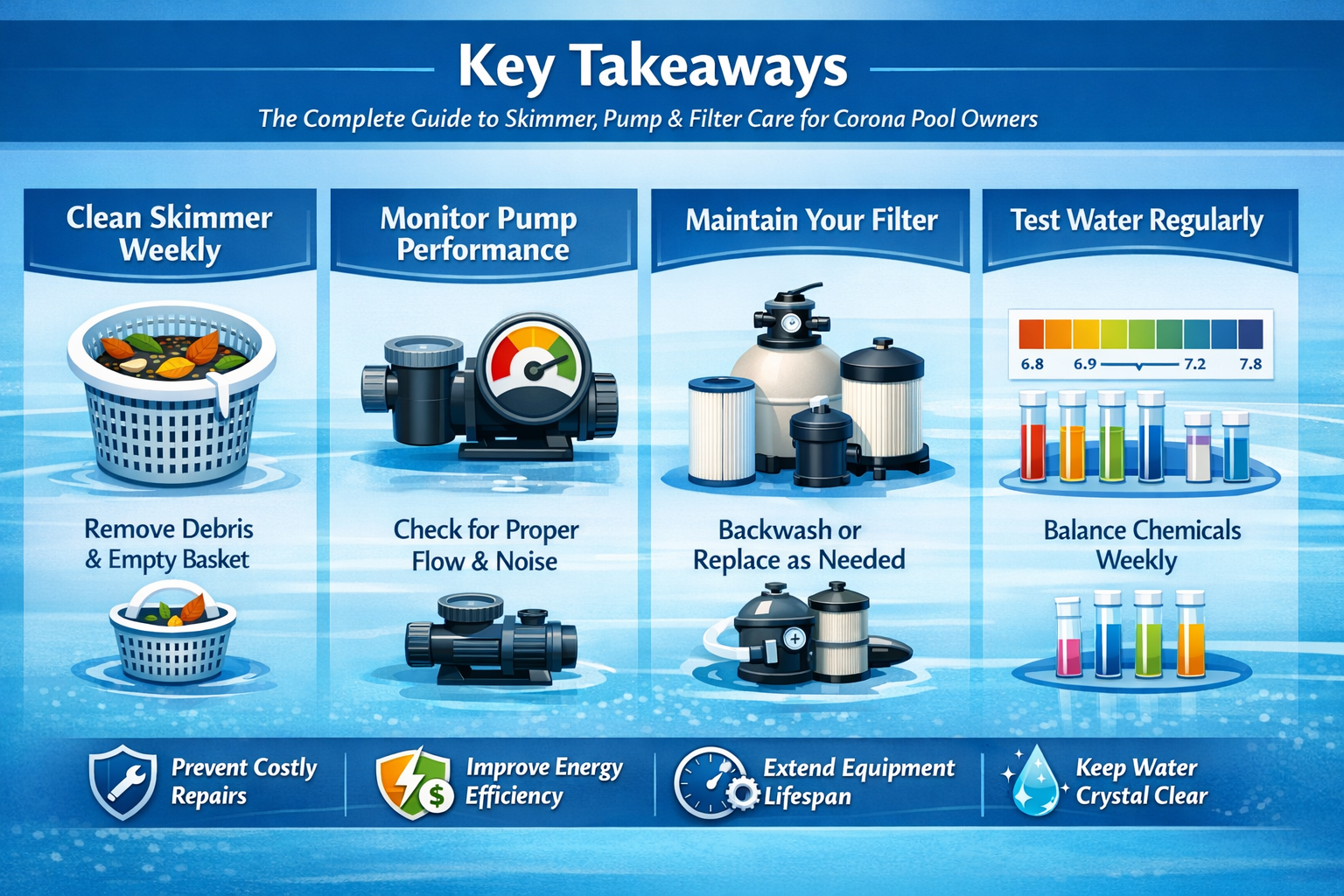
Key Takeaways
• Regular cleaning schedules are crucial: Skimmer baskets need attention 1-2 times weekly, while filters require cleaning when pressure rises 8-10 psi above normal
• Proper water levels optimize performance: Maintain water at 2/3 of the skimmer mouth opening for maximum debris capture efficiency
• Pump runtime directly affects water quality: Run your pump 8-12 hours daily to ensure adequate circulation and filtration
• Different filter types have unique maintenance needs: Cartridge, sand, and D.E. filters each require specific care schedules and procedures
• Safety first approach prevents damage: Always turn off the pump before performing any maintenance to protect equipment and ensure safe access
Understanding Your Pool’s Circulation Trinity
The Critical Role of Skimmers, Pumps, and Filters
Your pool’s circulation system operates like a well-orchestrated team. The skimmer acts as the first line of defense, capturing leaves, insects, and surface debris before they sink to the bottom. The pump serves as the heart of the system, creating the suction that pulls water through the skimmer and pushes it through the filtration system. Finally, the filter removes microscopic particles and contaminants that the skimmer basket can’t catch.
When any component in this trinity fails or operates inefficiently, the entire system suffers. A clogged skimmer basket forces your pump to work harder, reducing its lifespan and increasing energy costs. An overworked pump can’t maintain proper water circulation, leading to stagnant areas where algae and bacteria thrive. A dirty filter restricts water flow and fails to remove contaminants effectively.
Why Corona’s Climate Demands Extra Attention
Living in Corona means dealing with unique environmental challenges that affect your pool equipment. Our warm, dry climate accelerates evaporation, requiring frequent water level adjustments to maintain optimal skimmer operation. Desert winds carry dust and debris that can quickly overwhelm skimmer baskets. Additionally, the year-round swimming season means your equipment works harder and longer than pools in seasonal climates.
Essential Skimmer Maintenance for Optimal Performance
Weekly Skimmer Care Routine
Safety first: Always shut off your pool pump before beginning any skimmer maintenance [8]. This prevents debris from being pulled through the system and ensures safe access to all components.
Start your weekly routine by removing the skimmer cover and lifting out the waste basket. Empty all debris and rinse the basket thoroughly with your garden hose. Pay special attention to leaves and organic matter that may have adhered to the basket walls – these materials can decompose and create water quality issues if left behind.
Pro tip: 🧹 Keep a dedicated brush near your pool equipment for scrubbing stubborn debris from skimmer baskets.
After cleaning, inspect the basket for cracks or damage that could allow debris to pass through. Replace damaged baskets immediately to maintain filtration efficiency. Before reinstalling, take a moment to clean any visible debris from the skimmer throat and check that the weir gate moves freely.
Monthly Deep Cleaning and Inspection
Your monthly Skimmer, Pump & Filter Care routine should include a more thorough inspection of skimmer components. Remove any scale or slime buildup from the skimmer walls using a pool brush and appropriate cleaning solution. Check the condition of the weir gate and cover gasket, replacing worn components as needed.
Important maintenance checklist:
- ✅ Verify proper suction by observing debris movement toward the opening
- ✅ Clean visible pipes to remove scale and slime accumulation
- ✅ Test weir gate movement and replace if damaged
- ✅ Inspect cover gasket for cracks or deterioration
- ✅ Check for air bubbles in the system after restarting
Maintaining Proper Water Levels
The optimal water level for skimmer operation sits at approximately 2/3 of the skimmer mouth opening [1]. This level ensures maximum debris capture while preventing air from entering the system. Water levels that are too low cause the skimmer to suck air, reducing pump efficiency and potentially damaging equipment. Conversely, water levels that are too high prevent the skimmer from effectively capturing surface debris.
“Proper water level maintenance is the foundation of effective skimmer operation. It’s a simple adjustment that prevents major headaches down the road.”
Pump Care and Optimization Strategies
Establishing the Right Runtime Schedule
Your pool pump should run 8-12 hours per day to maintain proper circulation and filtration [3]. The exact runtime depends on factors like pool size, bather load, and environmental conditions. In Corona’s climate, I recommend starting with 10 hours daily and adjusting based on water clarity and quality.
Consider splitting your pump runtime into two sessions – morning and evening – to maximize circulation efficiency while taking advantage of off-peak electricity rates. Many modern variable-speed pumps allow you to program different speeds throughout the day, optimizing energy consumption while maintaining water quality.
Recognizing Signs of Pump Stress
A clogged skimmer basket creates a domino effect that stresses your entire system. When debris restricts water flow, your pump must work harder to maintain circulation, leading to:
- Increased energy consumption and higher utility bills
- Premature wear on pump seals and bearings
- Reduced filtration efficiency due to decreased water volume
- Potential motor damage from overheating
Monitor your pump for unusual noises, vibrations, or changes in water flow. These symptoms often indicate maintenance issues that require immediate attention.
Seasonal Pump Considerations
Corona’s year-round swimming season means your pump works continuously, making regular maintenance even more critical. During peak summer months, increase your pump runtime to handle higher bather loads and faster chemical consumption. In winter, you may reduce runtime slightly, but never completely shut down your system unless professionally winterizing your pool.
Filter Maintenance: The Heart of Clean Water
Understanding Filter Types and Their Needs
Cartridge Filters require the most frequent attention but offer excellent filtration quality. Clean cartridge filters every 2-4 weeks during peak season by removing and hosing them down with a strong spray [2]. Perform deep cleaning monthly using filter cleaner solutions, and replace cartridges every 2-3 years or when cleaning no longer restores white color.
Sand Filters offer durability and lower maintenance frequency. Backwash when pressure rises 8-10 psi above normal starting pressure [2][3]. Perform chemical cleaning twice yearly to remove oils and organic buildup that regular backwashing can’t eliminate. Replace filter sand every 3-5 years as the media loses its sharp edges and filtering effectiveness.
D.E. (Diatomaceous Earth) Filters provide the finest filtration but require the most technical maintenance. In year-round pools like those in Corona, perform chemical cleaning four times per year or monthly when water appears cloudy [2]. Always add fresh D.E. powder after backwashing to maintain filtration efficiency.
Creating a Filter Maintenance Schedule
| Filter Type | Weekly | Monthly | Seasonally | Annually |
|---|---|---|---|---|
| Cartridge | Visual inspection | Deep clean | Replace if needed | Full replacement |
| Sand | Pressure monitoring | Backwash as needed | Chemical cleaning | Sand replacement (3-5 years) |
| D.E. | Pressure monitoring | Chemical cleaning | Grid inspection | Grid replacement |
Monitoring Filter Pressure
Your filter pressure gauge is your best friend for timing maintenance. Record the “clean” pressure after each cleaning or backwash – this becomes your baseline. When pressure rises 8-10 psi above this baseline, it’s time for maintenance [2][3]. Don’t wait longer, as excessive pressure reduces flow rate and stresses your entire system.
Troubleshooting Common Issues
Addressing Poor Water Circulation
Poor circulation often stems from neglected Skimmer, Pump & Filter Care. Start troubleshooting with the simplest solutions:
- Check skimmer baskets for clogs or damage
- Verify proper water levels for optimal skimmer function
- Inspect pump strainer basket for debris accumulation
- Monitor filter pressure and clean if elevated
- Examine pump impeller for debris or damage
Dealing with Recurring Debris Problems
If you’re constantly battling debris despite regular cleaning, consider these solutions:
- Install a leaf trap before the pump to catch larger debris
- Trim nearby vegetation to reduce organic matter
- Use a pool cover when the pool isn’t in use
- Increase skimmer basket cleaning frequency during heavy debris seasons
Energy Efficiency Optimization
Maximize your system’s efficiency with these strategies:
- Upgrade to a variable-speed pump for significant energy savings
- Maintain clean filters to reduce pump workload
- Keep skimmer baskets empty to ensure unrestricted flow
- Program pump runtime during off-peak electricity hours
- Regular equipment maintenance prevents energy-wasting inefficiencies
Seasonal Care Considerations for Corona Pools
Summer Intensive Care
Corona’s hot summers demand increased attention to your Skimmer, Pump & Filter Care routine. Higher temperatures accelerate algae growth and increase chemical consumption, making efficient circulation crucial. Increase pump runtime during heat waves and clean skimmer baskets more frequently as increased pool usage brings more debris.
Monitor water levels daily during summer, as evaporation can quickly drop levels below optimal skimmer operation. Consider installing an automatic water leveler to maintain consistent levels without daily attention.
Winter Maintenance Adjustments
While Corona rarely experiences freezing temperatures, winter brings unique challenges. Reduced daylight and cooler temperatures can allow algae to establish in poorly circulated areas. Maintain regular pump operation and cleaning schedules, even with reduced pool usage.
If you choose to close your pool seasonally, proper preparation includes emptying skimmer baskets, lowering water levels if using a winter cover, and ensuring no stagnant water remains in skimmer pipes [1].
Year-Round Vigilance
Unlike seasonal climates, Corona’s year-round swimming weather means your equipment never gets a break. This continuous operation makes preventive maintenance even more critical. Establish consistent routines and stick to them – the investment in time and attention pays dividends in equipment longevity and water quality.
Professional Maintenance vs. DIY Care
When to Call the Professionals
While most Skimmer, Pump & Filter Care tasks are well within the capabilities of dedicated pool owners, certain situations warrant professional attention:
- Pump motor issues requiring electrical work
- Plumbing leaks around skimmer or return fittings
- Filter housing cracks or structural damage
- Persistent circulation problems despite proper maintenance
- Equipment upgrades or major component replacement
Building Your DIY Maintenance Skills
Start with basic tasks and gradually expand your skills:
Beginner Level: Skimmer basket cleaning, water level adjustment, basic filter cleaning
Intermediate Level: Pump basket maintenance, filter pressure monitoring, equipment troubleshooting
Advanced Level: Filter media replacement, minor plumbing repairs, equipment optimization
Cost-Benefit Analysis
Regular DIY maintenance typically costs $50-100 monthly in supplies and chemicals, compared to $150-300 for professional service. The time investment averages 2-3 hours weekly but prevents costly repairs and extends equipment life significantly.
Advanced Tips for Optimal Performance
Maximizing Equipment Lifespan
Proper Skimmer, Pump & Filter Care can extend equipment life by 50-100%. Key strategies include:
- Never run pumps dry – always maintain proper water levels
- Clean components before they become heavily soiled
- Use quality replacement parts that meet or exceed OEM specifications
- Address minor issues immediately before they become major problems
- Keep detailed maintenance records to track equipment performance
Integrating Smart Pool Technology
Modern pool automation can enhance your maintenance routine:
- Smart pumps with programmable schedules and remote monitoring
- Automated water levelers maintaining optimal skimmer operation
- Pressure sensors alerting you when filters need cleaning
- Flow meters detecting circulation problems early
Environmental Considerations
Eco-friendly maintenance practices benefit both your pool and the environment:
- Variable-speed pumps reduce energy consumption by up to 80%
- Proper chemical balance minimizes environmental impact
- Regular maintenance prevents equipment waste from premature failure
- Efficient filtration reduces water waste from frequent backwashing
Conclusion
Mastering Skimmer, Pump & Filter Care transforms pool ownership from a constant struggle into an enjoyable experience. The key lies in understanding that these three components work together as an integrated system – neglecting any one element affects the entire operation.
Your action plan starts today:
- Establish a weekly routine for skimmer basket cleaning and visual equipment inspection
- Monitor filter pressure and clean when it rises 8-10 psi above baseline
- Maintain proper water levels at 2/3 of the skimmer mouth opening
- Run your pump 8-12 hours daily for optimal circulation
- Keep detailed maintenance records to track patterns and prevent problems
Remember, consistent attention to these fundamentals prevents the majority of pool problems before they start. Your future self – relaxing by crystal-clear water instead of battling equipment failures – will thank you for the investment in proper Skimmer, Pump & Filter Care.
The path to pool perfection isn’t complicated, but it does require commitment. Start with the basics, build consistent habits, and gradually expand your knowledge. Before long, you’ll have the confidence and skills to maintain your Corona pool at peak performance year-round.
References
[1] Pool Equipment Maintenance Guidelines, National Swimming Pool Foundation, 2025
[2] Filter Maintenance Standards, Association of Pool & Spa Professionals, 2025
[3] Pool Circulation Best Practices, Pool Industry Research Council, 2026
[8] Pool Safety and Maintenance Protocols, International Pool Safety Association, 2025
SEO Meta Information:
Meta Title: Skimmer, Pump & Filter Care Guide for Corona Pool Owners 2026
Meta Description: Master essential skimmer, pump & filter care with our comprehensive guide. Learn maintenance schedules, troubleshooting tips, and optimization strategies for Corona pools.
Images